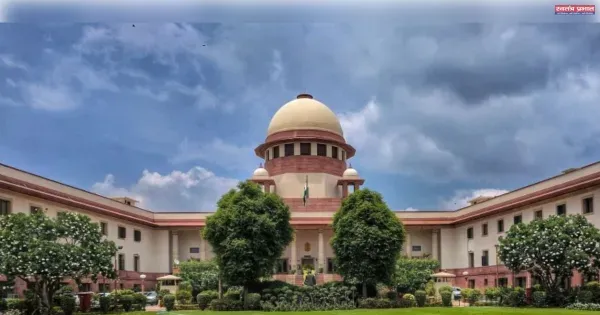
Bureau Prayagraj. Following the 2018 verdict to women’s entry into the Sabarimala temple, the Supreme Court is now considering the jurisdiction to define superstition within the religion. During a hearing before a nine-judge Constitution bench on Wednesday, the Supreme Court made the important observation that it has the power and jurisdiction to decide what practice in a religion is superstition.
The comment came in response to the central government’s contention that Solicitor General Tushar Mehta had said that a secular court cannot decide the issue as judges are experts in law and not religion. Mehta argued that even if a practice is considered superstitious, it is not the job of the court to decide, but it is the job of the legislature under Article 25(2)(b) of the Constitution to make reform laws. He said that the legislature can reform any particular practice by declaring it as superstition, as many laws have been made to stop witchcraft and other such practices.
However, Justice Ahsanuddin Amanullah dismissed Mehta’s argument as too simplistic, saying that the court has the authority and jurisdiction to decide whether something is a superstition or not. He clarified that what happens after this is the job of the legislature, but it cannot be said in the court that the decision of the legislature will be final.
Solicitor General Mehta also argued that a secular court cannot decide whether a religious practice is mere superstition, as the court cannot have such scholarly competence. He said ‘You (the judge) are an expert in the field of law, not religion.’ Mehta also said that what might be religious for Nagaland might be superstitious for someone else, as the society is extremely diverse.
Justice B.V. Nagarathna presented a different view, saying that while determining an essential religious practice, the court should look through the lens of the philosophy of that particular religion. “You cannot impose the ideas of another religion and say it is not an essential religious practice,” he said. The approach of the court is to apply the philosophy of the religion which is subject to health, morality and public order.
Delhi He did not touch Sita even though he could have done so. Ram did not stand up for Sita when he should have done so. Ravana
In October 2014, Ayyub quoted Ali Sardar Jafri, which read, “How long will Ravana rule over poor Sita’s house, how long will he snatch Draupadi’s dress from her body.”
Additionally, in 2015, Ayyub made a tweet about Savarkar. That tweet read, “So Veer Savarkar called rape an essential part of Hindu nationalism.” In another tweet on Savarkar, Ayub said, “I was reading Nathuram Godse’s description of Savarkar and wondering if we should continue to honor this terrorist sympathizer.”
In 2016, Ayyub posted a tweet containing a photo of a boy with scars on his face. The tweet read, “Dear Indian Army, My guess is that this little boy was such a threat to India’s sovereignty that he was blinded for life.”
-
Foreign Secretary Misri reviews defence, trade ties with senior US officials

-
Shocking Incident in Muzaffarpur: Woman Attacks Lover
-
I'm A Celeb fans fume that ITV show is 'ruined' seconds into new episode

-
BBC Repair Shop star close to tears after heartbreaking on air moment

-
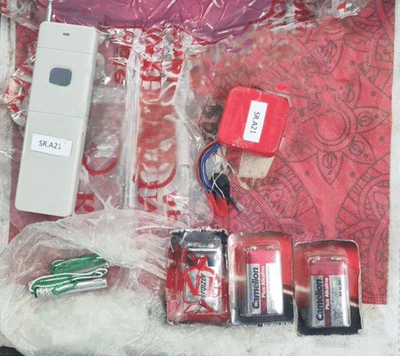
14.5 kg of IED recovered & neutralised in J&K's Shopian, averts major terror incident