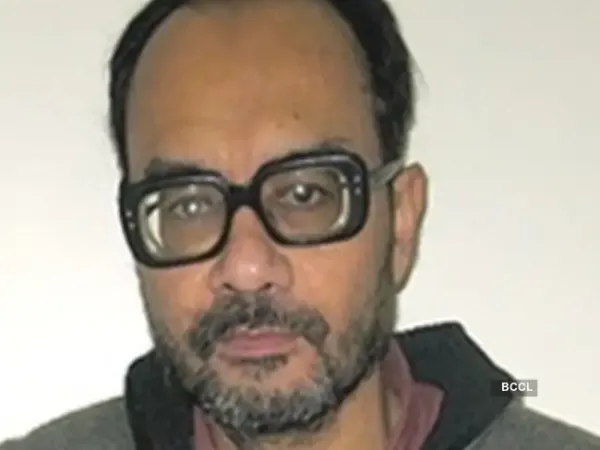
When you think of world-famous scientists, you might imagine a flashy lifestyle. But Professor Ashoke Sen is quite the opposite. Despite winning one of the richest prizes in science, he’s known for living simply, and even cycling to work. As mentioned on the IIT Kanpur website, Ashoke Sen completed his Master’s degree from IIT Kanpur after earning his Bachelor’s from Presidency College in 1975. His time at IIT Kanpur played a crucial role in shaping his journey into theoretical physics.
He later went on to pursue his PhD at Stony Brook University in the United States. Following this, he worked as a postdoctoral researcher at Fermilab (1982–1985) and SLAC (1985–1988), gaining valuable experience in high-level physics research.
A Career Built on Deep Scientific Contributions
In 1988, Sen joined the Tata Institute of Fundamental Research (TIFR), Mumbai, as a faculty member in physics. By 1997, he moved to the Harish-Chandra Research Institute in Allahabad, where he continues as a Distinguished Professor.
His work in string theory has had a massive impact. One of his most important contributions is S-duality, which helped scientists understand that different string theories are actually connected. He also pioneered research on unstable D-branes and proposed the well-known Sen conjecture related to tachyon condensation.
Another major contribution is his entropy function formalism, which helped link black hole physics with string theory by explaining the microscopic origin of black hole entropy.
The Fundamental Physics Prize: Bigger Than the Nobel?
In 2012, Ashoke Sen became one of the first recipients of the Fundamental Physics Prize, set up by Russian entrepreneur Yuri Milner. The award, known for its massive prize money, reportedly much larger than the Nobel Prize, recognised his role in advancing string theory.
He was honoured for helping establish that all string theories are different limits of a single underlying theory, a breakthrough idea in modern physics.
Despite global fame and numerous awards, Sen leads a very modest life. He is widely respected not just for his intellect but also for his grounded nature. His simple habit of cycling to work reflects his personality, focused, humble, and quietly brilliant.
Awards and Honours Worth Noting
Over the years, he has received several prestigious honours, including the Padma Bhushan (2013), Padma Shri (2001), Dirac Medal (2014), Infosys Prize (2009), and the Shanti Swarup Bhatnagar Award (1994). He is also a Fellow of the Royal Society and several leading science academies.
Why Ashoke Sen Inspires So Many
Ashoke Sen’s journey, from IIT Kanpur to becoming a globally recognised physicist, is truly inspiring. As highlighted on the IIT Kanpur website, his academic path and achievements reflect a lifetime of dedication to science.
More importantly, his simple lifestyle reminds us that true greatness doesn’t need to be loud. Sometimes, it quietly rides a bicycle to work.
He later went on to pursue his PhD at Stony Brook University in the United States. Following this, he worked as a postdoctoral researcher at Fermilab (1982–1985) and SLAC (1985–1988), gaining valuable experience in high-level physics research.
A Career Built on Deep Scientific Contributions
In 1988, Sen joined the Tata Institute of Fundamental Research (TIFR), Mumbai, as a faculty member in physics. By 1997, he moved to the Harish-Chandra Research Institute in Allahabad, where he continues as a Distinguished Professor.His work in string theory has had a massive impact. One of his most important contributions is S-duality, which helped scientists understand that different string theories are actually connected. He also pioneered research on unstable D-branes and proposed the well-known Sen conjecture related to tachyon condensation.
Another major contribution is his entropy function formalism, which helped link black hole physics with string theory by explaining the microscopic origin of black hole entropy.
The Fundamental Physics Prize: Bigger Than the Nobel?
In 2012, Ashoke Sen became one of the first recipients of the Fundamental Physics Prize, set up by Russian entrepreneur Yuri Milner. The award, known for its massive prize money, reportedly much larger than the Nobel Prize, recognised his role in advancing string theory.He was honoured for helping establish that all string theories are different limits of a single underlying theory, a breakthrough idea in modern physics.
Despite global fame and numerous awards, Sen leads a very modest life. He is widely respected not just for his intellect but also for his grounded nature. His simple habit of cycling to work reflects his personality, focused, humble, and quietly brilliant.
Awards and Honours Worth Noting
Over the years, he has received several prestigious honours, including the Padma Bhushan (2013), Padma Shri (2001), Dirac Medal (2014), Infosys Prize (2009), and the Shanti Swarup Bhatnagar Award (1994). He is also a Fellow of the Royal Society and several leading science academies.Why Ashoke Sen Inspires So Many
Ashoke Sen’s journey, from IIT Kanpur to becoming a globally recognised physicist, is truly inspiring. As highlighted on the IIT Kanpur website, his academic path and achievements reflect a lifetime of dedication to science.More importantly, his simple lifestyle reminds us that true greatness doesn’t need to be loud. Sometimes, it quietly rides a bicycle to work.