Why is silver price up by 5.7% and gold price by 2%, and will precious metals reach dream levels or fall again? Precious metals markets reacted after the United States and Iran agreed to a two-week ceasefire. Oil prices dropped sharply and the US dollar weakened. Investors increased bets on interest rate cuts. Gold climbed to a near three-week high and silver recorded strong gains. Market participants are watching Federal Reserve signals, inflation expectations, and global tensions. Analysts expect demand for diversification to remain strong. Investors now want to understand if precious metals will continue rising or reverse direction in coming months.
Why is silver price up by 5.7% and gold price by 2%, and will precious metals reach dream levels or fall again?
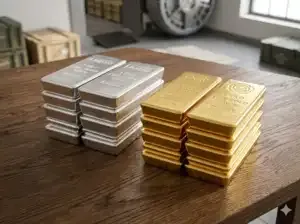
Gold rose to a near three-week high after news of a ceasefire between the United States and Iran. Spot gold increased 2% to $4,795.99 per ounce. Earlier in the session, gold gained more than 3% and reached its highest level since March 19. US gold futures for June delivery rose 3% to $4,824.70. Silver recorded stronger gains. Spot silver jumped 5.7% to $77.06 per ounce. Platinum gained 3.9% to $2,033.86. Palladium rose 4.1% to $1,529.53.
The price surge followed the announcement that Iran agreed to pause its blockade of oil and gas supplies through the Strait of Hormuz. Talks to negotiate a permanent end to the war are expected to begin on April 10 in Islamabad.
Why is silver price up by 5.7% and gold price by 2%?
The ceasefire announcement triggered major moves across global markets. Oil prices fell more than 13% and dropped below the $100 per barrel mark. The US dollar fell to its lowest level in a month.
A weaker dollar usually supports gold and silver. These metals are priced in dollars. When the dollar falls, metals become cheaper for global buyers. Demand increases and prices move higher.
Lower oil prices also influence inflation expectations. Falling oil prices reduce inflation pressure. This increases expectations that the Federal Reserve may cut interest rates sooner.
Investors now see a 43% chance of at least one rate cut by the end of the year. This figure was only 14% a day earlier, according to CME FedWatch data. Gold does not provide interest income. Lower interest rates reduce the opportunity cost of holding gold. This supports higher demand and pushes prices upward.
Will precious metals reach dream levels or fall again?
Gold prices had fallen 10% since February 28 after attacks by the United States and Israel. The recent ceasefire has changed market expectations. Analysts believe long-term demand remains strong. UBS expects gold to reach $5,900 per ounce by the end of the year. This outlook is based on rising government debt levels and lower real interest rates.
Investors are also using gold and silver as diversification assets. Market uncertainty, geopolitical tensions, and changing monetary policy continue to influence demand. However, markets are still cautious. Stocks and bonds rose after the ceasefire. Investors are waiting to see if the ceasefire leads to a permanent resolution before making large investments.
Analysts insights and market outlook
Market analysts say several factors are supporting precious metals:
• Falling oil prices
• Weak US dollar
• Rising expectations of rate cuts
• Diversification demand
• Rising global debt levels
The Federal Reserve will release minutes of its March policy meeting. Investors expect this release to provide signals on future interest rate decisions. Lower real interest rates remain one of the strongest drivers for gold. If interest rates fall, gold demand may increase further. Silver often follows gold but can move faster. Silver has industrial demand from technology and energy sectors. This adds another layer of support to silver prices.
What should investors do now?
Investors are closely watching global negotiations. The ceasefire is temporary and lasts for two weeks. Talks will begin soon to discuss a permanent solution. If tensions rise again, precious metals may gain further support. If global stability improves, prices could stabilise or decline.
Investors are balancing risks from inflation, interest rates, and geopolitics. Many investors are using gold and silver as part of diversified portfolios. Market participants are waiting for more signals from central banks before making major decisions.
FAQs
Q1. Why do interest rate cuts increase gold and silver prices?
Lower interest rates reduce returns from bonds and savings. Investors shift funds to gold and silver for value protection and diversification, which increases demand and supports higher prices.
Q2. How does a weaker US dollar affect precious metals prices?
Gold and silver are priced in dollars. When the dollar falls, metals become cheaper for global buyers. This raises international demand and usually pushes precious metals prices higher.
Why is silver price up by 5.7% and gold price by 2%, and will precious metals reach dream levels or fall again?
Gold rose to a near three-week high after news of a ceasefire between the United States and Iran. Spot gold increased 2% to $4,795.99 per ounce. Earlier in the session, gold gained more than 3% and reached its highest level since March 19. US gold futures for June delivery rose 3% to $4,824.70. Silver recorded stronger gains. Spot silver jumped 5.7% to $77.06 per ounce. Platinum gained 3.9% to $2,033.86. Palladium rose 4.1% to $1,529.53.The price surge followed the announcement that Iran agreed to pause its blockade of oil and gas supplies through the Strait of Hormuz. Talks to negotiate a permanent end to the war are expected to begin on April 10 in Islamabad.
Why is silver price up by 5.7% and gold price by 2%?
The ceasefire announcement triggered major moves across global markets. Oil prices fell more than 13% and dropped below the $100 per barrel mark. The US dollar fell to its lowest level in a month.A weaker dollar usually supports gold and silver. These metals are priced in dollars. When the dollar falls, metals become cheaper for global buyers. Demand increases and prices move higher.
Lower oil prices also influence inflation expectations. Falling oil prices reduce inflation pressure. This increases expectations that the Federal Reserve may cut interest rates sooner.
Investors now see a 43% chance of at least one rate cut by the end of the year. This figure was only 14% a day earlier, according to CME FedWatch data. Gold does not provide interest income. Lower interest rates reduce the opportunity cost of holding gold. This supports higher demand and pushes prices upward.
Will precious metals reach dream levels or fall again?
Gold prices had fallen 10% since February 28 after attacks by the United States and Israel. The recent ceasefire has changed market expectations. Analysts believe long-term demand remains strong. UBS expects gold to reach $5,900 per ounce by the end of the year. This outlook is based on rising government debt levels and lower real interest rates.Investors are also using gold and silver as diversification assets. Market uncertainty, geopolitical tensions, and changing monetary policy continue to influence demand. However, markets are still cautious. Stocks and bonds rose after the ceasefire. Investors are waiting to see if the ceasefire leads to a permanent resolution before making large investments.
Analysts insights and market outlook
Market analysts say several factors are supporting precious metals:• Falling oil prices
• Weak US dollar
• Rising expectations of rate cuts
• Diversification demand
• Rising global debt levels
The Federal Reserve will release minutes of its March policy meeting. Investors expect this release to provide signals on future interest rate decisions. Lower real interest rates remain one of the strongest drivers for gold. If interest rates fall, gold demand may increase further. Silver often follows gold but can move faster. Silver has industrial demand from technology and energy sectors. This adds another layer of support to silver prices.
What should investors do now?
Investors are closely watching global negotiations. The ceasefire is temporary and lasts for two weeks. Talks will begin soon to discuss a permanent solution. If tensions rise again, precious metals may gain further support. If global stability improves, prices could stabilise or decline.Investors are balancing risks from inflation, interest rates, and geopolitics. Many investors are using gold and silver as part of diversified portfolios. Market participants are waiting for more signals from central banks before making major decisions.
FAQs
Q1. Why do interest rate cuts increase gold and silver prices?
Lower interest rates reduce returns from bonds and savings. Investors shift funds to gold and silver for value protection and diversification, which increases demand and supports higher prices.
Q2. How does a weaker US dollar affect precious metals prices?
Gold and silver are priced in dollars. When the dollar falls, metals become cheaper for global buyers. This raises international demand and usually pushes precious metals prices higher.