India is well-prepared for the current global scenario and expects higher farm output this year, strengthening domestic food security and enabling support to other countries amid current global uncertainties, said M L Jat, Secretary, Department of Agricultural Research and Education (DARE) and Director General, Indian Council of Agricultural Research (ICAR).
Jat added that the ICAR is scaling up conservation agriculture and climate-resilient wheat research, alongside innovations to improve water-use efficiency, boost farmer incomes and enhance climate resilience. These efforts also support Aatmanirbhar agriculture through biofortification and Biological Nitrification Inhibition (BNI), aimed at long-term food and nutritional security.
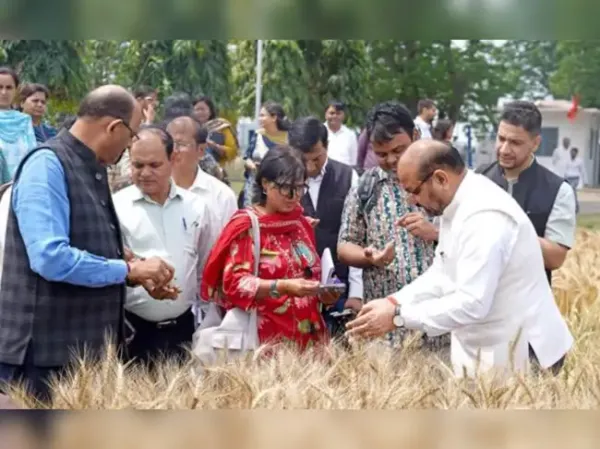
Jat on Wednesday visited the ICAR–Indian Institute of Wheat and Barley Research (IIWBR) and ICAR–Central Soil Salinity Research Institute (CSSRI), Karnal, to review ongoing research and development initiatives. He added that ICAR is focused on developing climate-resilient, nutrient-rich crop varieties to tackle climate risks while improving farm incomes and public health. Innovations such as Biological Nitrification Inhibition (BNI), he noted, can reduce fertiliser use by up to 25% without affecting productivity, benefiting both farmers and the environment.
 Jat said that India’s agriculture sector, which has moved from food deficit to surplus since the Green Revolution, is now being reoriented to address challenges including groundwater depletion, crop residue burning, soil degradation, biodiversity loss and climate risks, with several initiatives undertaken in collaboration with CIMMYT, Borlaug Institute for South Asia and Japan International Research Center for Agricultural Sciences.
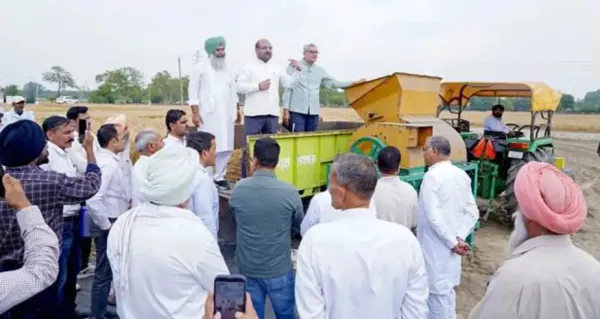
To address these priorities, ICAR, in collaboration with the International Maize and Wheat Improvement Center (CIMMYT), has been leading a long-term, systems-based research platform since 2009 at CSSRI, Karnal, focusing on locally tailored, climate-resilient and resource-efficient cropping systems, particularly the maize-wheat production system.
This conservation agriculture platform has generated significant outcomes, including up to 85 percent savings in irrigation water, 28 percent reduction in fertilizer use, 51 percent savings in fuel consumption, and up to 95 percent reduction in crop residue burning.
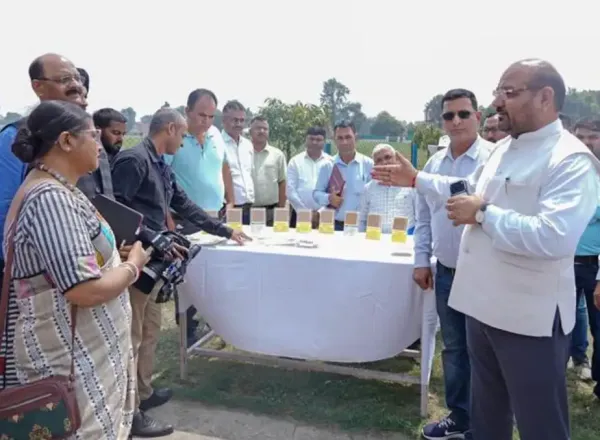 During the visit, Jat also reviewed the Indian Wheat Rust Research and Surveillance Programme, which plays a critical role in protecting wheat crops from stripe, leaf, and stem rust diseases through coordinated monitoring, rapid diagnostics, and timely advisories.
Progress in BNI-enabled wheat development was also reviewed, highlighting its role in improving nitrogen use efficiency by reducing losses due to leaching and emissions. Research integrating breeding, genomics, and multi-location evaluation is underway, with 19 promising wheat lines currently under evaluation at 70 percent of recommended nitrogen levels. It is estimated that adoption on 25 percent of cultivated area, along with a 30 percent reduction in nitrogen application, could result in annual savings of approximately Rs 2,000 crore.
Jat further reviewed pre-breeding programmes utilizing wild relatives such as Aegilops, including Aegilops tauschii, to introduce traits for tolerance to drought, heat, salinity, and diseases. In the area of nutritional security, ICAR has released 55 biofortified wheat varieties enriched with iron, zinc, and protein. Nearly 45 percent of the wheat cultivation area is now under biofortified varieties, reflecting increasing farmer adoption and a high varietal replacement rate.
Jat added that the ICAR is scaling up conservation agriculture and climate-resilient wheat research, alongside innovations to improve water-use efficiency, boost farmer incomes and enhance climate resilience. These efforts also support Aatmanirbhar agriculture through biofortification and Biological Nitrification Inhibition (BNI), aimed at long-term food and nutritional security.
Jat on Wednesday visited the ICAR–Indian Institute of Wheat and Barley Research (IIWBR) and ICAR–Central Soil Salinity Research Institute (CSSRI), Karnal, to review ongoing research and development initiatives. He added that ICAR is focused on developing climate-resilient, nutrient-rich crop varieties to tackle climate risks while improving farm incomes and public health. Innovations such as Biological Nitrification Inhibition (BNI), he noted, can reduce fertiliser use by up to 25% without affecting productivity, benefiting both farmers and the environment.
During the visit, Jat also reviewed the Indian Wheat Rust Research and Surveillance Programme.
To address these priorities, ICAR, in collaboration with the International Maize and Wheat Improvement Center (CIMMYT), has been leading a long-term, systems-based research platform since 2009 at CSSRI, Karnal, focusing on locally tailored, climate-resilient and resource-efficient cropping systems, particularly the maize-wheat production system.
This conservation agriculture platform has generated significant outcomes, including up to 85 percent savings in irrigation water, 28 percent reduction in fertilizer use, 51 percent savings in fuel consumption, and up to 95 percent reduction in crop residue burning.
Jat said the country expects higher output this year, ensuring domestic food security while retaining the capacity to support other nations amid current global uncertainties.
Progress in BNI-enabled wheat development was also reviewed, highlighting its role in improving nitrogen use efficiency by reducing losses due to leaching and emissions. Research integrating breeding, genomics, and multi-location evaluation is underway, with 19 promising wheat lines currently under evaluation at 70 percent of recommended nitrogen levels. It is estimated that adoption on 25 percent of cultivated area, along with a 30 percent reduction in nitrogen application, could result in annual savings of approximately Rs 2,000 crore.
Jat further reviewed pre-breeding programmes utilizing wild relatives such as Aegilops, including Aegilops tauschii, to introduce traits for tolerance to drought, heat, salinity, and diseases. In the area of nutritional security, ICAR has released 55 biofortified wheat varieties enriched with iron, zinc, and protein. Nearly 45 percent of the wheat cultivation area is now under biofortified varieties, reflecting increasing farmer adoption and a high varietal replacement rate.