At a time when it is recommended to avoid doomscrolling, content creators are finding themselves in a fix. Logging off may be good for mental health, but for those whose work depends on staying visible, it is not always an option.
For many, the challenge is no longer just about managing screen time, but about redefining their relationship with platforms that are both a source of income and a constant pull on their attention.
For Yusra Youssif, a digital creator with over 363,000 followers on Instagram, logging off is not really an option. As social media becomes both her workspace and source of pressure, finding balance has become just as important as staying visible.
“Being a creator and also having this as my full-time job is a lot of pressure,” she said. “You have to stay creative for clients, be intentional about what you post, and keep up with what’s happening online. But when you scroll for inspiration, all you see is the news, and it’s hard to ignore.”
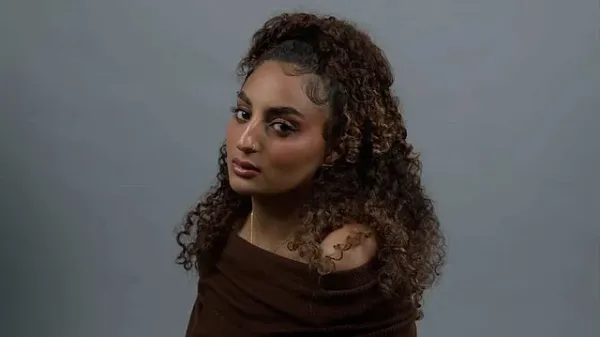
Yusra Youssif
Known for humour-driven content for her own platform, Youssif said the current online environment makes it harder to create in the same way.
“My content is usually light and funny, and I feel like I need to consume that to produce it too,” she said. “But everything feels so heavy now. Sometimes, I don’t even feel motivated to talk to the camera.”
She described an ongoing internal conflict between loving what she does and feeling weighed down by constant exposure to global events.
“You’re constantly aware of everything happening in the world, and it can feel overwhelming, or even guilty sometimes.”
Youssif said the shift came when she realised how much constant scrolling was affecting her. “I had to learn this the hard way. I used to wake up and scroll for hours trying to know what’s going on, and it made me anxious without even realising it.”
Now, she is more intentional with how she uses social media. “I don’t let social media be the first thing I see in the morning, and I try not to scroll mindlessly. If I’m online, it’s usually with a purpose, whether I’m posting, engaging, or checking something specific, and then I log off and try to keep my screen time low. You can still care, be aware, and continue your life. It doesn’t have to be one or the other.”
Longform versus short-form content
For Dubai-based lifestyle creator Twinkle Stanly, who has built a following of over 600,000 on Instagram, the turning point came earlier this year.

Twinkle Stanly
After watching The Social Dilemma, she began to recognise her own habits in what the documentary described.
“One of the tech experts said something along the lines of, ‘for the past few years, it feels like we’ve all fallen under a spell,’” she said. “That line stayed with me, because it described exactly how I had been feeling, disconnected from my own life, and stuck in the cycle of short-form content.”
Stanly began noticing changes in her own behaviour, from fragmented attention to struggling to stay present in conversations.
“I had goals, but there were days I couldn’t even get out of bed because I was glued to my phone. That was my wake-up call,” she said.
She is now nearly three weeks into cutting out doomscrolling, a shift she says has already made a difference.
“Within the first week, I noticed better focus. Now, I feel less anxious, more present, and more engaged with my creative work,” she said, adding that she has returned to habits she previously struggled to maintain, including reading and engaging with long-form content.
Still, stepping away entirely is not realistic. Instead, she has redefined how she uses social media.
“I decided to use social media only to create, not to consume, and even that is now limited to about an hour a day,” she said. “I keep my apps blocked and only unblock them when I have something meaningful to share.”
This shift, she added, has made her content more intentional, forcing her to think ahead rather than post reactively.
Subject mattersFor other creators, the challenge lies in the nature of the content itself. “It’s difficult as a lifestyle creator to not think in terms of content all the time, when it is all about showing your daily life,” said Dana Itani, an AI filmmaker and tech creator based in the UAE.
To create some distance, Itani who has 17k followers on Instagram has chosen to narrow her focus.
Dana Itani
“I’ve niched down to mostly sharing the tech and creative side of my lifestyle. This separation allows me to keep some parts of my life offline,” she said.
But even with boundaries, the pressure to keep producing remains.
“The algorithm doesn’t understand human nuances or circumstances. It puts creators in a constant output schedule,” she said.
To manage this, Itani has built a system that prioritises sustainability over constant output.
“I make sure my output level is something I can manage weekly and monthly to avoid burnout,” she said. “I batch create evergreen content that I can share on days when I don’t feel like filming or when I want to spend time with family.”
She also divides her time intentionally, separating “filming days” from offline time.
Beyond structure, both creators acknowledge the emotional weight of staying online during difficult times.
“It’s even difficult to focus because the world feels heavy,” Itani said. “But I’ve always believed in creating to spread positivity and creativity, to offset some of that negativity.”
No switching offFor some creators, however, stepping back is not always a realistic option, even when the need for a break is clear.
Asma, a UAE-based content creator with over 100,000 followers on Instagram, said she simply cannot afford to switch off.
“I can’t afford to step back,” she said. “This is my full-time job, my income depends on it. If I’m not posting, I’m not visible, and that affects everything.”
She added that while conversations around digital detox are growing, they often don’t reflect the reality of creators whose livelihoods are tied to staying online.
“You can take a break, but you feel it almost immediately in your reach and engagement. So it’s not as simple as just logging off,” she said.
Scrolling through stability: How everyday digital content shapes perception Doomscrolling all night? Here’s why you can’t stop and how to break the loop Is dopamine fasting key to doomscrolling and online addiction?-
RR Dynamic Duo Yashasvi Jaiswal, Vaibhav Sooryavanshi Steal The Show Following Batting Heroics Against Mumbai Indians
-
FC Barcelona vs Atletico Madrid Live Streaming: When And Where To Watch UEFA CHampions League Live In India?

-
India's U12 Football Team Scripts History At Real Madrid Foundation World Challenge

-
Hockey India Announces 24-Member Indian Women's Squad For Argentina Tour
-
Sanya Malhotra, Sitarist Rishab Rikhiram Sharma Break Up Without Ever Confirming Romance, Unfollow Each Other On Instagram