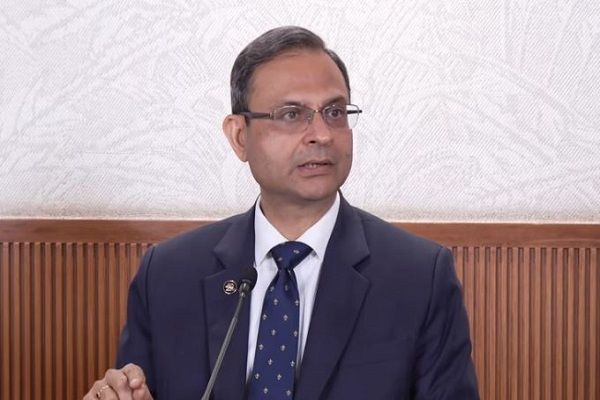
New Delhi, 8 April. The Reserve Bank of India (RBI) has adopted a neutral stance by keeping the repo rate unchanged at 5.25 percent in the first monetary policy review for the financial year 2026-27. The decision was in line with market expectations and was unanimously approved by the six-member Monetary Policy Committee (MPC) after two days of discussion. The objective of this decision of RBI is to maintain economic stability amid the current global uncertainties.
Announcing the policy decision of the MPC here today, RBI Governor Sanjay Malhotra said that the Bank Rate and the Marginal Standing Facility (MSF) rate have been kept unchanged at 5.50 per cent, while the Standing Deposit Facility (SDF) rate has also remained unchanged at 5.00 per cent. This decision has been taken at a time when the economic situation at the global level remains challenging.
Inflation decreased after the October policy – RBI Governor
Sanjay Malhotra described 2025 as a challenging year, but also said that inflation has come down since the October policy. He described the better efficiency of the banking system as a major support for the economy. It is noteworthy that this announcement came just hours after US President Donald Trump announced a two-week ceasefire with Iran. This development created a positive environment in the global markets and the Indian stock market also witnessed a tremendous rise.
India’s real GDP growth rate in the current financial year 6.9% expected to remain
The RBI Governor said that India’s real GDP growth rate in the current financial year is estimated to be 6.9 percent. However, he also warned that global economic uncertainties, especially rising tensions in West Asia and high crude oil prices, could put pressure on India’s growth rate. He clarified that external factors remain the major risks to India’s economic momentum.
Global economy facing unprecedented challenges
Malhotra also said that the global economy is facing unprecedented challenges at this time. Inflation remains vulnerable to a resurgence due to supply-side constraints and rising energy prices. However, he expressed confidence that India’s economic fundamentals are strong and the country’s macroeconomic situation is more stable and capable than before.
There remains a risk of increase in inflation
The Monetary Policy Committee also indicated that inflation is currently under control, but there remains a risk of a rise in it. Uncertainty over weather could push up food prices, while higher crude oil prices could widen the current account deficit. In such a situation, RBI has considered it appropriate to adopt the strategy of ‘wait and watch’ i.e. keeping an eye on the situation.
RBI believes that in the current situation, it is a wiser step to assess the situation rather than making hasty changes in interest rates. The central bank has adopted a balanced approach and tried to control inflation on the one hand and support economic growth on the other.
-
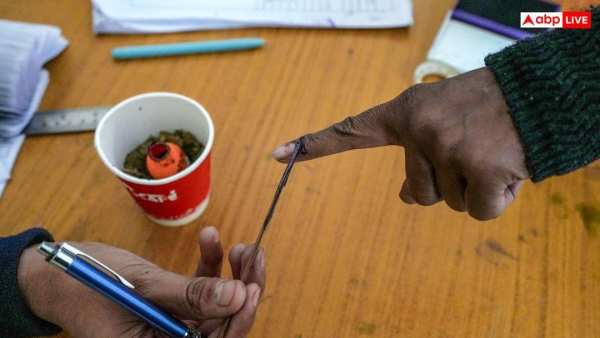
Assembly Elections 2026: Voting Begins Across Assam, Kerala, Puducherry Amid Tight Contests
-
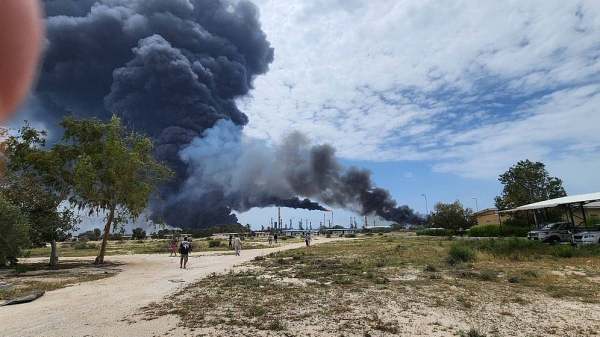
Iran Launches Drone Strikes On UAE, Kuwait After Lavan Refinery Hit Despite Ceasefire
-
Continued Israeli strikes in Lebanon threaten fragile US–Iran ceasefire

-
Trump's 'Right Hand' JD Vance To Lead US-Iran Talks In Pakistan, Tehran Confirms Participation

-
Allu Arjun birthday: From Kajal Aggarwal to Jr NTR, wishes the 'Raaka' actor; Rashmika Mandanna hopes he parties hard