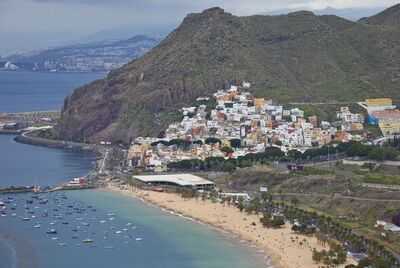
Easter holidaymakers heading to the Canary Islands face disruption after authorities declared a coastal weather alert covering the entire archipelago.
The regional government activated the warning on the evening of April 7, drawing on forecasts from the national meteorological service. Officials said the decision followed established emergency protocols for severe weather events.
A spokesman said the alert "is in accordance with the Canary Islands Specific Emergency Plan for Risks of Adverse Meteorological Phenomena (PEFMA)."
"NW swell of 3-4m across all islands. Locally, N or NW winds of force seven between La Gomera and Tenerife. Low tidal coefficient," a spokesman said.
"Swell period peaking at 17m this afternoon/evening and gradually decreasing during Wednesday morning, with tidal coefficients of 37 and 29 on Wednesday and Thursday, and 28 on Friday.
"High tide times will be: 5.37am and 5.57pm on Wednesday, April 8; 6.35am and 7.05pm on Thursday, April 9; 8.14am and 10.42pm on Friday, April 10."
Still recovering from Storm ThereseThe fresh alert arrives as the islands are still dealing with the aftermath of last month's Storm Therese, which caused some of the worst flooding and landslide damage seen in the region in recent memory, reports GB News.
Gran Canaria was among the hardest hit, with the storm forcing around 3,000 people from their homes overnight. Floodwater tore through road networks, cutting whole villages off from emergency services. Those without shelter were taken to a local secondary school, with rescue teams cautioning that the worst might not yet have passed.
The scale of the infrastructure damage was significant. Landslides took out more than a dozen roads across the island. The Arguineguin ravine overflowed, forcing the closure of a key arterial route. Resorts across the south and centre of Gran Canaria - among them San Bartolome de Tirajana, Santa Lucia, Mogan and Telde - sustained considerable damage, and properties along the Pozo Izquierdo coastline took a battering from gale-force winds and heavy surf.
Across the water in Tenerife, gusts of 73mph swept through the island during the night, bringing down street lighting and cutting power to homes across the south-west and north-west. Dozens of residents were left without electricity before supply was restored.
Saharan dust earlier this yearFebruary brought a different kind of threat. A mass of Saharan dust drifted over the islands, triggering a separate government warning as the haze - known locally as a calima - settled across the archipelago.
Health officials cautioned that those with underlying lung or heart conditions faced an elevated risk, and advised everyone to limit time outdoors.
Physical exertion was discouraged for the duration. Road users were told to drive with headlights on and keep their speed down until conditions improved.
-
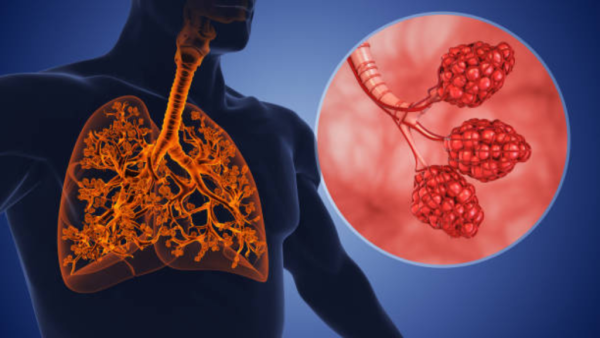
Health Issues: Lungs of Non-Smokers are also at risk due to air pollution, a matter of concern; Read the symptoms
-
The 160-Year-Old Indian Perfume Technique That's Outperforming Modern Chemistry

-
Mental Health Tips: Mind will remain cool even amidst stress, just include these vitamins and minerals in your diet.

-
The biggest challenge of balancing faith and technology and the biggest promise made by Namit Malhotra regarding the quality of the film.

-
Oneplus Nord 6 Specifications: Snapdragon 8s Gen 4 Chipset, 9,000mAh Battery, And 50MP Sony Camera—Check All Features And Price