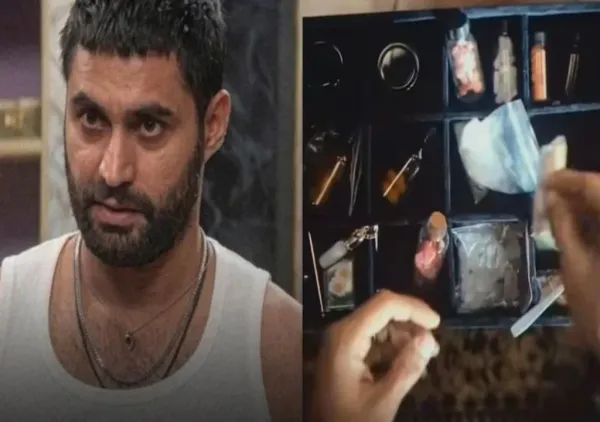
Chandigarh: The buzz around Dhurandhar 2 has gone beyond cinema, with its portrayal of drug culture sparking widespread discussion online. A key scene involving the character Pinda has drawn attention not just for its dialogue, but for the coded names of drugs casually referenced—terms that, according to experts, reflect a real and evolving underground vocabulary.
In an interaction with NDTV, a Punjab-based narcotics expert decoded these terms, revealing a deeper and more concerning reality behind the seemingly playful language used in the film.
The logic behind coded drug language
Drug slang is rarely arbitrary. Experts explain that such terminology is designed to evade law enforcement while building an insider network among users and dealers. These names often borrow from pop culture, food, emotions, and geography—making them easier to remember but harder to trace.
Border states like Punjab, due to their proximity to international trafficking routes, have developed a distinct vocabulary shaped by local usage and global influences.
Mandakini: A dangerous nostalgia
One of the terms highlighted in the film is “Mandakini,” which refers to low-grade heroin, commonly known as smack. The name is derived from Mandakini, who rose to fame with the film Ram Teri Ganga Maili.
While the name may evoke cinematic nostalgia, the substance it represents has had a devastating impact, particularly in northern India since the 1980s. Smack is often adulterated, increasing its toxicity and risk to users.
Sajan and Dubai Dashing: Cocaine’s dual identity
“Sajan,” meaning beloved or lover, is used to refer to cocaine. The term reflects how the drug is perceived—as aspirational and associated with pleasure and status.
A more premium variant is referred to as “Dubai Dashing,” where the geographical tag implies higher purity and exclusivity. In contrast, “Chika Powder” denotes a lower-grade version of cocaine, often mixed with other substances, making it cheaper but more harmful.
Khargosh: The unpredictable high
“Khargosh,” which translates to rabbit, is not tied to a single drug. Instead, it describes substances that produce a sudden and intense high.
The metaphor captures the experience—fast, jittery, and unpredictable—rather than the chemical composition. This category could include stimulants or synthetic drug combinations.
Lollipop: Innocence masking danger
Another term, “Lollipop,” refers to LSD (Lysergic Acid Diethylamide), a potent hallucinogen. The name draws from its method of distribution, as LSD is sometimes infused into candy-like forms.
Despite its association with colourful and psychedelic experiences, LSD significantly alters perception and cognition, and its use remains limited but present in niche urban and tourist circles in India.
Chamcham: A shifting mystery
Interestingly, the expert could not definitively identify “Chamcham.” While it is the name of a popular Bengali sweet, its use in drug slang appears ambiguous.
This highlights a key challenge in tracking narcotics culture—terminology evolves rapidly, and meanings can vary across regions and networks. Even experts may struggle to keep up with newly emerging code words.
A reflection of reality
The film’s attention to detail in depicting such terminology has been noted as unexpectedly accurate. While Dhurandhar 2 is a work of fiction, its portrayal underscores the real and complex dynamics of drug networks in regions like Punjab.
Conclusion
The viral popularity of these terms on social media may seem trivial on the surface, but experts warn that they represent a deeply entrenched issue. Understanding the language is a step towards recognising the scale and adaptability of drug networks.
As conversations around drug abuse continue in India, such depictions—intentional or otherwise—serve as a reminder of the urgent need for awareness, enforcement, and rehabilitation efforts.
-
Adityanath reviews GeM procurement, praises UP's policy on transparency and efficiency
-
World Bank ups India's FY27 GDP growth projections to 6.6 pc; flags Middle-East crisis uncertainty
-
Not end of war, enriched uranium to leave Iran through agreement or force: Netanyahu
-
DC VS GT, IPL 2026: Washington Smashes Maiden Half-Century, Gill-Buttler Power Gujarat To 210/4
-
IPL 2026: Rain Threat Looms Over KKR Vs LSG Clash In Kolkata After Washout Against PBKS; Check Weather Update