Kolkata, Apr 7 (PTI) The Congress in its 2026 West Bengal assembly poll manifesto has pivoted sharply towards direct welfare fund transfer, women-centric schemes, and expansion of healthcare and rural support systems, marking a clear departure from its 2021 election pitch centred on industrial revival and employment generation through that.
While the party’s 2021 manifesto, titled "Bring back the glory of Bengal", as a part of its alliance with the Left Front and ISF, stressed growth through proposals such as setting up industrial hubs and electric vehicle manufacturing units in Asansol and Durgapur, the 2026 document places greater emphasis on cash transfers and social security measures.
The party is contesting on its own in 2026.
One of the striking features this time is the proposed “Durga Samman” scheme, promising Rs 2,000 per month to women aged 18 to 59, alongside free travel on government public transport. This marks a significant shift from the earlier focus on employment-led empowerment to direct financial assistance.
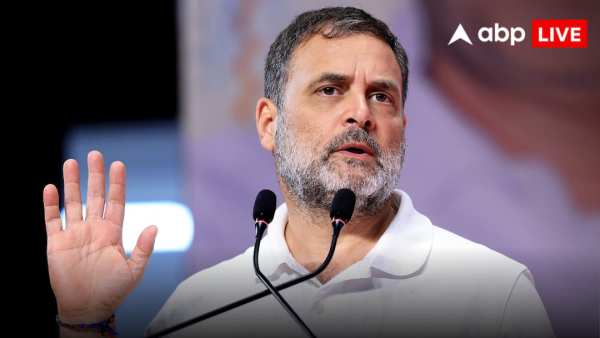
"The most important point is that our manifesto does not talk about distributing money but also about rebuilding the economy of the state. Despite the TMC government being in power for the last 15 years, development has been lacking. There is a requirement for investment and employment," Congress president Mallikarjun Kharge said while releasing the manifesto here on Tuesday.
"On the other hand, whenever Bengal is the issue, the BJP does not talk about the economy, but about the polarisation of the people. There is no clarity on jobs, nor any clarity on industry revival plans, or youth roadmap," he said.
The party in 2026 manifestor also pledged to fill all vacant government posts with youths within a year.
Kharge said that Congress has brought one solution to all these. The party will follow 'Madhyamarg' (Middle Path) shown by Jawaharlal Nehru and move forward.
"Special stress will be given to women's empowerment. Under the Durga Samman scheme, we will provide a monthly assistance of Rs 2,000, free education up to the postgraduate level, and free government transport for all women. We will also bring up fast-track courts for the safety of the women," he said. On women’s safety, both manifestos retain continuity in promising fast-track courts, but the latest document goes further by proposing a new “Abhaya Women’s Protection Act”, 24-hour helplines, and dedicated police units, reflecting a more structured legal and institutional approach.
The proposed Act is named after 'Abhaya', the moniker given by the media to the RG Kar hospital rape-murder victim.
The 2026 manifesto also expands its welfare net with a Rs 10 lakh health insurance scheme 'Swastha Suraksha' and a health card in the name of legendary Congress leader and former Bengal Chief Minister Dr Bidhan Chandra Roy, free cancer treatment and dialysis at district hospitals, and diagnostic services for women in government facilities without cost.
In contrast, the 2021 manifesto had broadly focused on improving healthcare infrastructure and upgrading hospitals.
Agriculture and rural development, which earlier centred on procurement support and opposition to central farm laws, now feature expanded grassroots interventions.
The 2026 manifesto promises annual financial assistance to marginal farmers, free electricity for agricultural work, cold storage infrastructure, and a “Farm to Market Mission” to rebuild rural connectivity and markets.
Additionally, new proposals such as providing livestock and saplings to families upon the birth of a child in villages and setting up fisheries research centres indicate a push towards livelihood diversification, an aspect less pronounced in 2021.
Another key shift is the emphasis on universal access to services. The party has promised to upgrade all Primary Health Centres to 24x7 facilities, fill vacancies in hospitals, and ensure free medicines and diagnostics—moving beyond the earlier broad commitments to healthcare improvement.
The manifesto also pledged targeted support for specific groups, including tea garden workers, widows, and senior citizens, with pension schemes and housing benefits, reflecting a more segmented welfare strategy.
Overall, the 2026 manifesto signals a transition from a development model anchored in industrialisation and job creation to one driven by direct welfare, social protection, and targeted financial assistance, aligning more closely with prevailing electoral trends in the state. PTI SCH NN NN
-
Effective tips for summer skin care

-
Before Nitish Kumar went to Rajya Sabha, Nishant Kumar became emotional, said- ‘Bihar will not forget his father’s 20 years of work’
-
Billionaire wife of Journey to the West actor Chi Zhongrui dies at 85

-
Zahid Ahmed reveals why he chose marriage over dating
-
If you want to drink cold water from a pot in summer, then take care of cleaning the pot also.