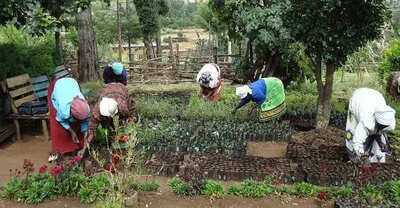
In rural Kenya, the problem was not abstract. It was not a policy paper or a distant climate warning. It was the everyday ache of walking farther for firewood, the fear of a dry well, and the shrinking patch of land that could no longer feed a family properly. Wangari Maathai understood that kind of crisis because she listened to it. Long before she became a Nobel laureate, she was hearing the same practical worries from rural women: no firewood, no clean drinking water, not enough food, no secure income. Her answer was disarmingly simple: plant trees, but the force behind it would end up reshaping environmental activism across Africa. Scroll down to know more...
A movement born from ordinary needs
Maathai was born in Nyeri, Kenya, in 1940, and went on to study biology in the United States before earning a doctorate at the University of Nairobi, where she became a trailblazer in academia as well. But her most important education came from the land itself. She saw forests being cleared and replaced by commercial plantations, and she watched erosion and deforestation make life harder for rural communities, especially women. That link, between environmental damage and human suffering, became the core of her life’s work.
In 1977, while active in Kenya’s National Council of Women, Maathai introduced the idea of planting trees with local women’s groups. What began as a practical response to environmental loss soon grew into the Green Belt Movement , a grassroots effort aimed at restoring degraded land and improving daily life. The idea spread through villages and communities because it matched lived reality: trees could provide fuel, hold soil, protect water sources and support livelihoods. The movement did not begin as a grand slogan. It began as a solution people could see with their own eyes.
Why trees became a political act
Maathai’s insight was radical in its simplicity. She saw that environmental harm was never only environmental. When forests disappear, women walk farther for wood. When soil erodes, harvests shrink. When water sources dry up, families pay the price. In her Nobel lecture, she explained that the Green Belt Movement was responding directly to the needs rural women identified and that tree planting was chosen because it was simple, achievable and capable of producing quick results. In other words, she turned ecology into a form of everyday survival.
The movement also became a school of civic power. As it expanded, thousands of ordinary citizens were mobilised and empowered to act, and the work gradually broadened beyond trees. Maathai argued that responsible care for the environment could not be separated from democratic space. Under pressure from Kenya’s authorities, she was harassed, beaten and jailed, and the environmental campaign became inseparable from the fight for human rights. That transformation helped make her one of the most important public voices in modern African history.
From seedlings to a continental legacy
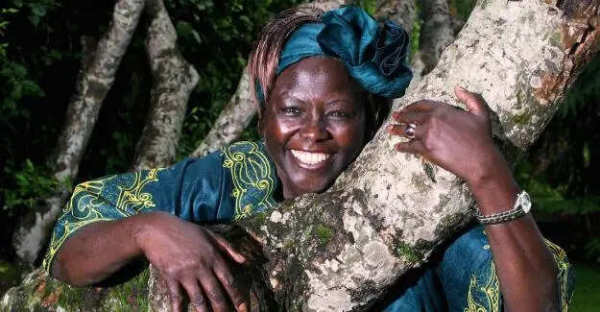
The Green Belt Movement did not stay confined to one county or one country. According to the Nobel Prize and the movement itself, the idea spread beyond Kenya to other African countries, where women planted millions of trees during the 1980s. The Nobel Foundation says the movement helped plant more than 30 million trees, while the Green Belt Movement today says its tree-growing work has reached 51 million trees grown. Those figures differ because they come from different institutions and likely reflect different counting methods and time periods, but both point to the same truth: Maathai’s idea scaled far beyond its modest beginning.
That scale mattered because the project was never just about reforestation in the narrow sense. The Green Belt Movement says it still works through tree-growing, environmental advocacy, community empowerment, sustainable livelihoods and climate resilience . Its public mission today is rooted in the same logic Maathai voiced decades ago: restore land, strengthen communities and protect the future at the same time. In modern environmental language, that is called sustainability . In Maathai’s hands, it was simply common sense with moral force.
The woman who made a tree stand for peace
In 2004, Maathai became the first African woman to receive the Nobel Peace Prize , recognized for her contribution to sustainable development, democracy and peace. She was also the first person to win the Peace Prize primarily for environmental work. That recognition captured the full shape of her legacy: she did not separate nature from politics, or women’s rights from public life, or tree planting from peacebuilding. For her, all of it belonged to the same struggle.
Her death in 2011 did not close the story. The Green Belt Movement continues to frame its work around tree planting, advocacy and community action, while UNEP has credited Maathai as an inspiration for the Billion Tree Campaign, which went on to inspire billions of plantings worldwide. The deeper legacy, though, is harder to count. It lives in the idea that environmental repair can begin with one person, one seedling and one stubborn refusal to accept decline as destiny. That was Maathai’s gift: she made hope feel practical.
-
Why is the tradition of touching feet considered special in Hindu religion? Know its religious and scientific aspects

-
Mercury-Saturn conjunction, which zodiac signs have good days? read horoscope

-
Astro predictions for April 8, 2026: Know What Your Zodiac Sign Have for You

-
Lahori Paneer Recipe: How To Make This Rich Punjabi Dish For A Special Meal

-
Wedding Reception: Rashmika Mandanna’s beauty in Kodagu style saree, gold jewelery and Gajra, Bala’s beauty