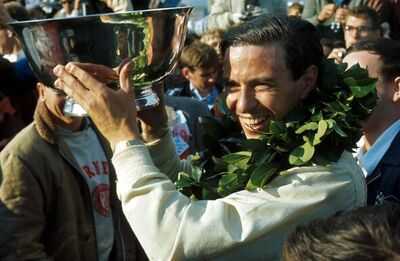
British F1 world champion Jim Clark met his end in devastating and harrowing circumstances when he perished in a 170mph crash. On this day in 1968, Clark climbed into a race car for the very last time as the legendary driver and two-time F1 world champion was killed in a shocking Formula Two race at Hockenheim, sending the motorsport world into a state of profound grief.
Regarded as one of the greatest ever to grace the sport, the Scottish racing icon's legacy is immortalised in F1, and countless fans have been left pondering what he might have gone on to accomplish had his life not been so cruelly cut short. The 1963 and 1965 world champion held the record for the most wins (25), pole positions (33) and fastest laps (28) in F1 history. Clark also triumphed at the Indianapolis 500 in 1965, the first non-American winner of the race in 49 years.
His 60-year record for leading the highest percentage of laps in a season was finally surpassed by Max Verstappen during his dominant 2023 campaign.
Yet his standing within the sport would ultimately prove to be a catastrophic twist of fate in his demise.
Sponsored by two motorsport giants, Ford and Lotus, Clark was sought by the former to drive its new sports car at Brands Hatch, while Lotus wanted him to compete in the Formula Two event at Hockenheim.
Lotus claimed victory and Clark made the journey to Germany to compete around the forbidding circuit in the Deutschland Trophae, a fateful twist of destiny that would ultimately cost his life.
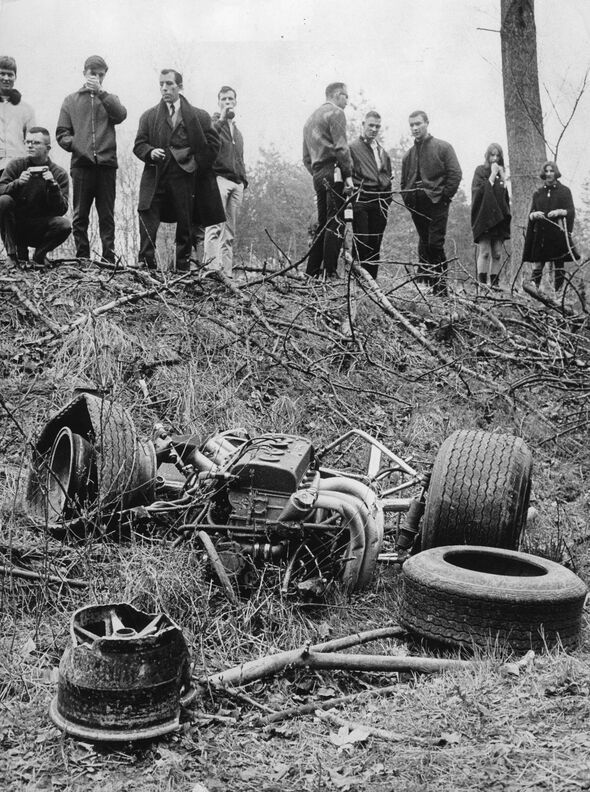
Running in eighth position and dissatisfied with both his progress and his machinery, Clark attempted to push the car harder before catastrophe struck on the sixth lap. His Lotus-Cosworth veered off the circuit from the Shrimps Head curve and cartwheeled into woodland at 170mph.
A police officer reported that the car struck the trees broadside, leaving the Scotsman with a broken neck and skull fractures. He died before arriving at hospital.
Crash investigators determined the most probable cause of the accident was a deflating rear tyre.
Meanwhile, fellow British driver Chris Irwin, who was travelling approximately 250 yards behind Clark, recalled: "Suddenly Jim's car broke out. It looked like something mechanical."
No definitive explanation for the crash has ever been established, yet Clark's contemporaries Jack Brabham and John Surtees were adamant that driver error was not responsible, firmly believing he was simply too gifted to make such a mistake.
His premature death dealt a devastating blow to the sport, as his team-mate Graham Hill went on to clinch the championship and dedicate the title to his memory. Clark had been leading the standings at the time of his death.
The Kilmany-born driver died three world titles short of five-time champion Juan Manuel Fangio, who competed throughout the 1950s.
Yet the Argentine legend told Clark's team member Cedric Selzer that he was the greatest of all time.
"I went to a cocktail party and Fangio was the guest of honour," Selzer recalled.
"He was speaking to me about Jim Clark, obviously via an interpreter. And he said: 'In my opinion, Jim Clark was the greatest racing driver ever'. And coming from Fangio, what else can I say?"
Clark wasn't merely an F1 legend, but a motorsport icon owing to his remarkable ability to compete across a multitude of disciplines.
That one fateful decision could have transformed the entire motorsport landscape, had Clark continued racing and channelled his ingenuity to the other side of the garage following his eventual retirement.
FOLLOW OUR F1 FB PAGE!Get all the latest from our Formula 1 coverage via our dedicated Facebook page.
-
Ravi Shastri got good news, stand will be built in 52 year old stadium
-
Vaibhav Suryavanshi did not get a place in the Indian team, Ayush Mhatre also out
-
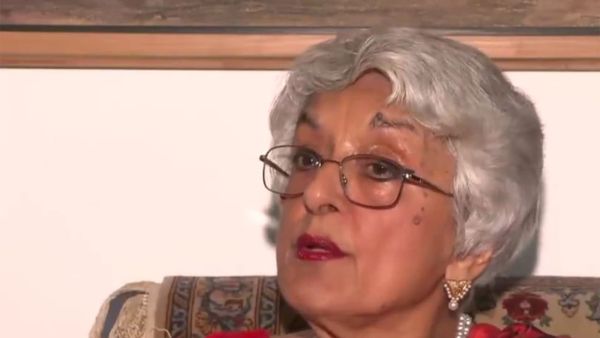
India welcomes new Bangladesh govt to bolster ties: Ex-envoy Veena Sikri
-
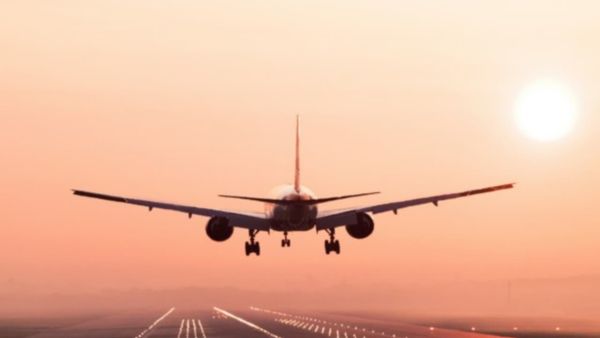
Indian airlines urge govt action on Dubai’s ‘uneven’ flight curbs
-
‘Dragon’ also failed in front of oil! Petrol and diesel prices increased for the second time in 15 days