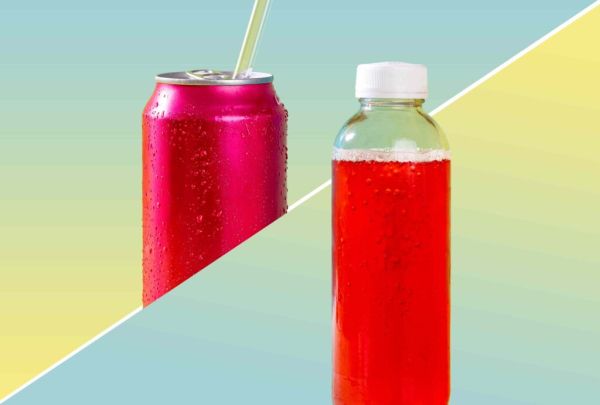
Both trendy beverages claim to support gut health, but they work differently. Here’s what dietitians want you to know.
Reviewed by Dietitian Karen Ansel, M.S., RDN
Key Points
- Prebiotic soda and kombucha may give your gut a little extra support.
- Kombucha contains helpful live bacteria, and prebiotic soda supplies fiber.
- Yet they can’t compare to the gut-health benefits of high-fiber and probiotic-rich foods.
Whether you’re grabbing a fizzy drink at the grocery store or scrolling through wellness content online, you’ve probably come across two trendy gut-health beverages: Prebiotic soda and kombucha. Both are marketed as better-for-you alternatives to traditional soda, and both claim to support digestion. But are they actually delivering on those promises? And is one better than the other?
No single drink transforms your gut overnight, but the basic distinction is simple. “Prebiotic soda has fiber, while kombucha has probiotic bacteria and yeast,” says Danielle Zold, RD, LDN, CLC.
Here’s what registered dietitians say these beverages can and can’t do for your gut health.
How Prebiotic Soda Impacts Gut Health
It Can Feed Your Existing Gut Bacteria
Prebiotic sodas are carbonated drinks infused with indigestible plant fibers (like chicory root and inulin). These fibers bypass digestion and travel to the colon, where they feed the beneficial bacteria that already live there. When this happens, your good gut bacteria produce compounds, called short-chain fatty acids, that help support a healthy gut barrier.
“I often describe prebiotics as fertilizer for your gut microbiome ‘garden’ because they feed microbes so that they grow and thrive,” says Jaime Shelbert, RDN, LDN. Encouraging as that may be, prebiotics in soda don’t travel in the same nutrient-filled package as prebiotic foods, like whole grains, beans, pulses and onions. So, think of them as a fun way to work in a little extra gut support.
The Effects Tend to Be Consistent
Because prebiotic fibers reliably resist digestion, you can be fairly confident they’ll reach the colon and nourish your microbiome. Shelbert calls prebiotic soda “a more predictable choice” than kombucha for this reason. One note: Some people experience bloating when they first increase prebiotic fibers, so if you don’t already drink prebiotic soda, start gradually.
It Can Help You Get More out of Fermented Foods
“Choosing a prebiotic soda is helpful if you have a diet that already contains fermented foods, like Greek yogurt, kimchi or kefir,” says Megan Huff, RDN. Just like prebiotics can feast on the good bacteria that live in your gut, they can also feed on beneficial bacteria from fermented foods.
How Kombucha Affects Gut Health
It Might Provide Beneficial Microbes
Kombucha is a fermented tea that contains live bacteria and yeast as well as antioxidants called polyphenols. Unlike prebiotic sodas, which feed the good bacteria that are already in your gut, kombucha may temporarily supply new microbial strains (we say temporarily because its microbes only hang out in your gut for a short while until you poop them out).
But don’t expect kombucha to work miracles, as limited research finds its probiotic impact is modest. Unlike prebiotics, which have years of research backing their positive impacts on gut health, there aren’t many studies on kombucha and gut health yet—so stay tuned.
It May Increase Short-Chain Fatty Acid Production
Remember short-chain fatty acids, those beneficial compounds your good gut bacteria produce? Turns out, drinking kombucha might help you make more of them. In one small study, volunteers who drank kombucha for four weeks produced more short-chain fatty acids than a control group that didn’t consume kombucha.
Its Effects May Be Unpredictable
The benefits of kombucha are promising, but there is one key caveat: “We don’t always know which microbes and in what amount are present and whether they will survive digestion,” Shelbert explains.
Which One Is Better?
There’s no universal winner here. “Both can be considered tools to support a gut-healthy diet,” says Shelbert. “Rather than choosing one over the other, they both play complementary roles in a gut-supportive diet,” she says. The better pick depends on your starting point. If fermented foods are already a regular part of your rotation, drinking prebiotic soda may help bolster your microbiome. However, if they’re largely absent, kombucha can give you a little bump (although it can’t compare to probiotic-rich foods like yogurt and kefir).
Personal taste can also guide the decision. “Many people prefer the tangy, vinegary taste of kombucha, while others prefer the nostalgic, familiar flavors like grape, cola and root beer that you find in prebiotic sodas,” says Zold.
Also, keep in mind that kombucha contains considerably more added sugar than prebiotic sodas, as sugar is essential to the fermentation process (typically 15 grams of sugar per 12-ounce can of kombucha compared to roughly 2 to 5 grams per can of prebiotic soda). So, check the Nutrition Facts panel. Kombucha may also harbor trace amounts of alcohol (a natural byproduct of fermentation). But unless you’re buying hard kombucha, commercially produced kombucha doesn’t contain enough alcohol to qualify as an alcoholic beverage.
Other Strategies to Support Gut Health
Prebiotic soda and kombucha may give your gut a little extra help, but they can’t compare to the benefits of these healthy habits.
- Eat a wide variety of plants: Research suggests that the more plant-based foods you eat, the more your gut microbiome shifts, especially toward species linked to better heart and metabolic health. Aim for a wide variety of fruits, vegetables, legumes, nuts, seeds and whole grains.
- Include fermented foods. Kimchi, sauerkraut, kefir, miso and plain yogurt all contain beneficial bacteria. Research shows that regularly eating fermented foods can positively influence gut microbiome diversity.
- Slow down at mealtime. When you’re racing through your busy day, it can be hard to find time to slow down and actually enjoy your meals. However, it’s a goal worth pursuing, as mindful eating has been shown to help improve digestion.
- Get quality sleep. Did you know that sleep helps regulate the connection between your gut and your brain? Getting seven to nine hours of shut-eye per night can improve your energy and your gut health.
Our Expert Take
Both prebiotic sodas and kombucha may help give your gut a little extra support, but they won’t work miracles. They work in different ways, and they can’t replace the gut-health benefits of eating a wide variety of whole foods. Prebiotic sodas contain fibers that nourish the beneficial bacteria that are already living in your gut, while kombucha may temporarily provide beneficial microbes. However, their benefits may be limited. In the end, the real foundation of gut health is eating lots of fiber- and probiotic-rich whole foods. These beverages are a fizzy bonus, not the whole picture.
-
Bowlers need to take responsibility: MI captain Hardik after loss to RR

-
NCP AP Faction Crisis Open Amid Baramati By-Poll Elections

-
Keralam Assembly Polls: Political Parties Wrap Up Campaigning, 48-Hour Silence Period Kicks Off

-
'They Should Forget About Dream of Reaching Kolkata': J&K CM Omar Abdullah on Pak Minister's Remarks

-
People of Bengal Have Made Up Their Mind to Form a BJP Government: Haryana CM