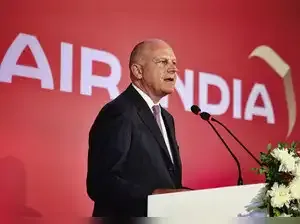
Air India said on Tuesday that Campbell Wilson has stepped down as CEO and Managing Director, as the airline grapples with persistent losses and heightened regulatory scrutiny following a crash last year that killed 260 people.
Wilson in a statement said that the time was right for him to hand over the reins for the next phase of Air India’s rise.
The airline has constituted a panel to find Wilson's successor.
ALSO READ: Air India CEO Campbell Wilson resigns after Ahmedabad crash
As per the Tata owned carrier, Wilson had conveyed his intention to step down in 2026 to Air India Chairman N Chandrasekaran in 2024. "Since then, has been working to ensure the organization and leadership team is on a stable footing for the transition. He will remain in the role until his successor is announced and in place."
"It has seen the complete modernization of systems, the launch of new physical products, and deployment of elevated service standards on ground and in the air, as well as 100 additional aircraft added to the fleet. The full interior refit of legacy narrowbody aircraft has all-but been completed, with deliveries of widebody aircraft with new custom-designed interiors now underway."
"Critical enabling infrastructure including South Asia’s largest training academy, two flight simulator facilities, a flying school and a greenfield maintenance repair and overhaul base has also been initiated to support the scale, standards and ambition of the new Air India."
With these foundational blocks now settling and a brief window until deliveries from the nearly 600-strong aircraft orderbook commence in earnest from 2027, "the time is right for me to hand over the reins for the next phase of Air India’s rise," he continued.
"It has been a true honour to play a small part in this latest chapter of Air India’s long history, and I will continue to be an enthusiastic supporter of this wonderful organization and its people.”
New Zealand-born Wilson's term was due to end in 2027. He is currently serving a six-month notice period.
Since taking over the top job in 2022, Wilson has steered the airline through the early and difficult stages of its turnaround, including overhauling Air India's engineering department and refurbishing planes amid supply chain disruptions.
Chandrasekaran's note
Chandrasekaran said, “On behalf of the Board, I wish to record my deep appreciation for Campbell’s leadership and contribution over the past four years. In addition to the progress mentioned above, it is also worth acknowledging the numerous external challenges navigated by the Air India team, including prolonged post-Covid supply chain constraints that have impacted delivery of new aircraft and retrofit programs as well as major geopolitical and other headwinds. Campbell and his team have demonstrated tenacity and resolve and have aligned an organization drawn from many backgrounds behind the shared goal of building the new Air India that is now emerging.”
Air India has a fleet of 191 planes and has placed orders for more than 500 aircraft.
It has lost money since being bought by Tata Group in 2022, with the financial pressure worsening since Pakistan banned Indian carriers from its airspace last year. Air India and its low-cost carrier Air India Express reported a combined loss of Rs 9,808 crore ($1.05 billion) in the 2024-2025 financial year.
A prolonged Iran war will add further pressure on Air India's lucrative western routes, already scaled back due to Pakistan's restrictions.
Wilson in a statement said that the time was right for him to hand over the reins for the next phase of Air India’s rise.
The airline has constituted a panel to find Wilson's successor.
ALSO READ: Air India CEO Campbell Wilson resigns after Ahmedabad crash
As per the Tata owned carrier, Wilson had conveyed his intention to step down in 2026 to Air India Chairman N Chandrasekaran in 2024. "Since then, has been working to ensure the organization and leadership team is on a stable footing for the transition. He will remain in the role until his successor is announced and in place."
In Campbell Wilson's words
In a note, Wilson stated, the four years since Air India’s privatisation has seen the acquisition and successful merger of four airlines, an evolution from public to private sector practices along with renewal of the leadership team, workforce, culture and ways of operating."It has seen the complete modernization of systems, the launch of new physical products, and deployment of elevated service standards on ground and in the air, as well as 100 additional aircraft added to the fleet. The full interior refit of legacy narrowbody aircraft has all-but been completed, with deliveries of widebody aircraft with new custom-designed interiors now underway."
"Critical enabling infrastructure including South Asia’s largest training academy, two flight simulator facilities, a flying school and a greenfield maintenance repair and overhaul base has also been initiated to support the scale, standards and ambition of the new Air India."
With these foundational blocks now settling and a brief window until deliveries from the nearly 600-strong aircraft orderbook commence in earnest from 2027, "the time is right for me to hand over the reins for the next phase of Air India’s rise," he continued.
"It has been a true honour to play a small part in this latest chapter of Air India’s long history, and I will continue to be an enthusiastic supporter of this wonderful organization and its people.”
New Zealand-born Wilson's term was due to end in 2027. He is currently serving a six-month notice period.
Since taking over the top job in 2022, Wilson has steered the airline through the early and difficult stages of its turnaround, including overhauling Air India's engineering department and refurbishing planes amid supply chain disruptions.
Chandrasekaran's note
Chandrasekaran said, “On behalf of the Board, I wish to record my deep appreciation for Campbell’s leadership and contribution over the past four years. In addition to the progress mentioned above, it is also worth acknowledging the numerous external challenges navigated by the Air India team, including prolonged post-Covid supply chain constraints that have impacted delivery of new aircraft and retrofit programs as well as major geopolitical and other headwinds. Campbell and his team have demonstrated tenacity and resolve and have aligned an organization drawn from many backgrounds behind the shared goal of building the new Air India that is now emerging.”Air India has a fleet of 191 planes and has placed orders for more than 500 aircraft.
It has lost money since being bought by Tata Group in 2022, with the financial pressure worsening since Pakistan banned Indian carriers from its airspace last year. Air India and its low-cost carrier Air India Express reported a combined loss of Rs 9,808 crore ($1.05 billion) in the 2024-2025 financial year.
A prolonged Iran war will add further pressure on Air India's lucrative western routes, already scaled back due to Pakistan's restrictions.