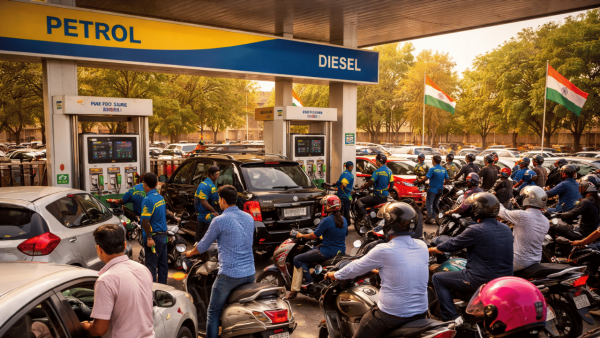
New Delhi: India’s ethanol blending programme is facing a new challenge. Production capacity has increased sharply over the last few years, but fuel consumption has not kept pace. At the same time, global crude oil prices remain high, pushing the government to look at ethanol as a way to reduce import dependence.
As reported by Autocar India, the Indian Sugar & Bio-Energy Manufacturers Association (ISMA) believes the solution lies in increasing blending beyond E20 and pushing flex-fuel vehicles in the long run.
Too much ethanol, less usage
India can produce nearly 2,000 crore litres of ethanol every year, and another 400 crore litres of capacity is expected soon. But current demand at the E20 level is only about 1,100 crore litres. This means almost half the capacity is not being used.
This gap is creating pressure on ethanol producers. Exporting is also difficult because Indian ethanol is expensive to make. A large part of the cost comes from sugarcane prices, which are fixed by the government and form a major share of production expenses.
Small step to E22
Instead of a big jump, ISMA is suggesting a move from E20 to E22. This is seen as a simple step that can be implemented without major changes.
According to the industry, vehicles designed for E20 can handle slightly higher blends like E22. This move could help use an extra 150 crore litres of ethanol. There could be some drop in fuel efficiency, but the impact is expected to be small overall, though older vehicles may see bigger changes.
Flex-fuel plan for the future
For the long term, ISMA wants India to adopt flex-fuel vehicles more aggressively. These vehicles can run on higher ethanol blends, even up to 100 per cent.
For this to work, two things are critical: lower prices for E100 fuel and no extra cost for flex-fuel vehicles compared to regular petrol cars. E100 fuel could be priced closer to Rs 80 to 82 per litre if taxes are reduced, which would make it cheaper than petrol.
There are some early signs of policy support as well, especially through upcoming emission rules. But carmakers are still not fully on board, mainly because of the extra costs involved and the fact that they are already spending heavily on electric vehicles.
-
Buckingham Palace 6-word bombshell reveals 'King Charles's true feelings on Donald Trump'
-
Roared on by Filipino fans, Eala wins first clay court match in Austria

-
ITV Emmerdale villain's return 'sealed' in major Dr Todd twist

-
Liverpool injury update as Arne Slot explains plan for Alexander Isak ahead of PSG test

-
Meghan Markle must take advice from unlikely ITV star if she wants As Ever to thrive