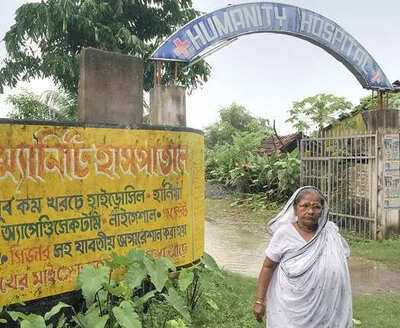
Before there was a hospital, there was a funeral no one should have had to endure. In 1971, Subhasini Mistry ’s husband died after falling ill with a minor, treatable disease because the family was too poor to get proper medical help. She was left widowed young, with four children and almost nothing else. What came next was not a dramatic reinvention overnight, but something slower and harder: a vow, repeated over years, that no poor person in her village should die the way her husband did. Scroll down to know more...
A promise made in poverty
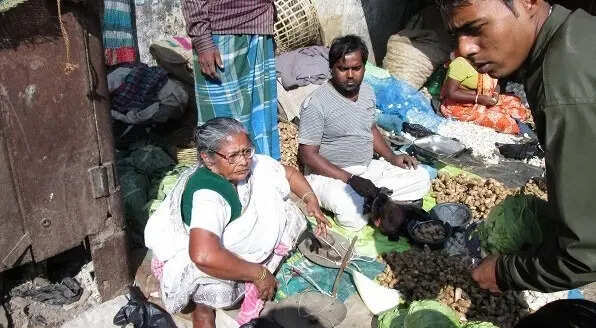
Mistry’s story has the force of a folk tale, but the facts are plain. She lived in Hanspukur near Kolkata and spent years doing whatever work would keep her family afloat, working as a housemaid, manual labourer and vegetable seller. She was poor, and when her husband fell seriously ill, he died because medical treatment came too late and was beyond their means. That loss became the turning point of her life, planting the resolve to build a place where the poor could receive healthcare without being turned away.
Her husband’s death was not only a personal tragedy. It exposed a harsher truth about access to care in rural India: hospitals may exist on paper, but poverty can still keep people outside the door. That is what made her response so powerful. She did not begin with money, status or medical training. She began with an experience of exclusion and with the stubborn conviction that basic treatment should not depend on cash in hand.
From vegetables to a vision
For years, Mistry saved tiny amounts from her work. The official story of Humanity Trust says she first voiced her dream to her younger son Ajoy in 1989. With his help, the family bought land in 1992, transferred it to the trust in 1993, and raised money to start a small charitable clinic in a hut, where doctors began treating patients free of charge. That modest beginning would eventually grow into Humanity Hospital. 
Other accounts fill in the same arc with additional detail. She worked as a vegetable seller when her husband died from gastroenteritis, a loss made worse by the absence of nearby medical facilities and the family’s inability to afford travel to a distant clinic. The tragedy stayed with her. Over the years that followed, she began turning that grief into action, determined to build a place where people like her husband would not be denied care. The United Nations in India later noted that she spent nearly two decades working to realise her dream of creating a hospital for the needy
Building brick by brick
The hospital did not appear fully formed. It was assembled, piece by piece, from savings, labour and community support. Reports say the first permanent hospital building was inaugurated in 1996. By then, the project had moved far beyond a family dream. It was becoming a functioning charitable institution, rooted in the same village where Mistry’s husband had died.
Her younger son, Dr Ajoy Mistry, became central to that work. The trust and related coverage identify him as the doctor who helped run the hospital with his mother. Humanity Trust’s own site says he and Subhasini Mistry worked to turn a widow’s vow into a healthcare service for the poor and later expanded the mission beyond the original village. The hospital’s identity was always practical rather than symbolic: free or low-cost care for people who might otherwise delay treatment until it was too late.
A hospital for those turned away
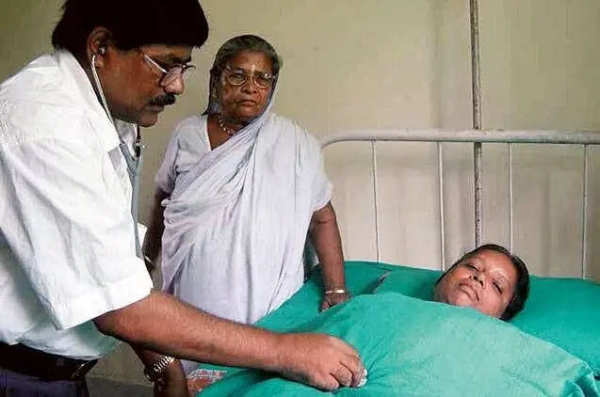
The reason Mistry’s story still travels so widely is that it carries a simple, uncomfortable question: what happens when the poor are forced to wait for care until it is no longer care at all? Her hospital became an answer to that question. The UN India profile says she is proof that age, wealth and education are not the only ingredients of achievement; hard work and hope matter too. That may sound like a familiar line, but in Mistry’s case, it is backed by nearly half a century of slog.
The institution she built is known as Humanity Hospital, under Humanity Trust, and official trust material says it serves the poor with free medical help. Over time, the project expanded into multiple facilities, including services in Hanspukur and beyond. That growth matters because it shows the difference between charity as a gesture and charity as a system. Mistry did not stop at sympathy. She built a structure that could keep working after the moment of inspiration faded.
Recognition came laterBy the time national recognition arrived, the work had already been in motion for decades. In 2018, the Government of India named Subhasini Mistry among the Padma Shri awardees for social work, as listed by the Press Information Bureau. The UN India feature also noted that she had been among the Women Transforming India Award winners in 2017. Awards did not create her legacy; they simply confirmed what the community around her had already known.
There is a reason this story endures. Mistry did not come from privilege, and she did not solve poverty with a speech. She built a hospital out of loss, then spent years making sure it served the people most likely to be ignored. That is why her life reads like more than inspiration. It reads like a corrective. In a country where one illness can still push a family toward ruin, Subhasini Mistry’s hospital stands as proof that compassion can be engineered, brick by brick, into something lasting.
-
Buckingham Palace 6-word bombshell reveals 'King Charles's true feelings on Donald Trump'
-
Roared on by Filipino fans, Eala wins first clay court match in Austria

-
ITV Emmerdale villain's return 'sealed' in major Dr Todd twist
-
Liverpool injury update as Arne Slot explains plan for Alexander Isak ahead of PSG test

-
Meghan Markle must take advice from unlikely ITV star if she wants As Ever to thrive