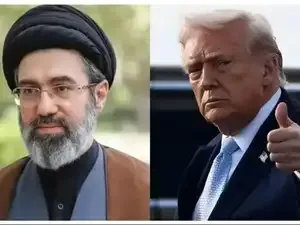
The United States and Iran are locked in a high-stakes standoff that could tip toward either a fragile 45-day pause or a dramatic escalation very soon. With President Donald Trump’s Tuesday deadline looming, diplomacy and military planning are unfolding in parallel, each shaping the other. A proposed 45-day ceasefire has emerged as a last-ditch pathway to de-escalation, but deep mistrust and competing strategic goals threaten to derail it. Even as mediators scramble, strikes continue on the ground, underscoring how narrow the window for peace has become.
Ceasefire is on the table, but trust is missing
At the center of the diplomatic push is a proposal for a 45-day ceasefire aimed at creating space for a permanent settlement. According to Axios, US, Iranian and regional mediators are exploring a two-phase framework where an initial pause in fighting would be followed by negotiations to end the war. CNN similarly reports that the draft proposal calls for reopening the Strait of Hormuz, a critical artery for global energy flows, as part of the first phase.
Yet the plan remains tentative. A White House official told CBS News that the proposal is “one of many ideas” and confirmed that Trump “has not signed off on it.” The same caution was echoed to Axios report citing officials saying that “Operation Epic Fury continues,” indicating that military pressure remains central to Trump’s approach.
Iran, however, has shown little enthusiasm for a temporary halt. Foreign ministry spokesperson Esmail Baghaei, quoted by Iranian state media, rejected the premise outright, arguing that negotiations are “entirely incompatible with ultimatums, crimes and threats of war crimes.” Iran fears a repeat of past ceasefires that allowed adversaries to regroup before resuming hostilities.
Also Read | Iran, US receive plan to end hostilities, immediate ceasefire; source says
The shadow of escalation
The urgency surrounding the ceasefire proposal stems largely from Trump’s deadline diplomacy. After initially setting a 10-day window, he extended the deadline slightly, now demanding a deal by Tuesday evening. His rhetoric has been blunt and threatening. Trump warned that failure to reach an agreement would result in devastating military action, saying he would “blow up everything over there.”
This is not mere posturing. Sources cited by Axios indicate that operational plans for a large-scale US-Israeli bombing campaign targeting Iranian energy infrastructure are ready. Such strikes could have far-reaching humanitarian and geopolitical consequences, potentially constituting war crimes and triggering retaliation against critical infrastructure across the Gulf.
The ceasefire proposal is widely viewed as a final attempt to prevent exactly such an escalation. The stakes extend beyond Iran and Israel, with Gulf countries’ oil and water facilities seen as vulnerable to retaliatory strikes.
Also Read | Iran accuses UN nuclear watchdog of inaction, warns of risk from attacks
The Strait of Hormuz: Bargaining chip and flashpoint
At the heart of the conflict lies the Strait of Hormuz, through which a significant portion of the world’s oil supply passes. The US has made reopening the strait a central demand, framing it as essential for global economic stability. Iran, however, sees it as a key leverage point.
According to Axios, mediators believe that fully reopening the strait can only happen as part of a final agreement, not during a temporary ceasefire. Iranian officials have suggested that any future arrangement may involve a permanent shift in control or even the imposition of tolls on passing ships as compensation for wartime damage.
This position reflects a broader strategic calculation. By maintaining pressure on global energy markets, Iran strengthens its negotiating hand. At the same time, it raises the risk of wider economic disruption if the conflict intensifies.
Last-ditch efforts and diplomatic backchannels
Diplomacy has not collapsed entirely. Pakistan, Egypt and Turkey are actively mediating between the US and Iran, according to both Axios and CNN. Communication continues through indirect channels, including text exchanges between US envoy Steve Witkoff and Iranian Foreign Minister Abbas Araghchi.
However, progress has been uneven. CNN reports that indirect talks stalled last week and efforts to arrange face-to-face negotiations have faltered. Even so, mediators are working to craft confidence-building measures, including partial steps on uranium enrichment and limited reopening of the strait.
Iran’s demands remain firm. Officials have insisted on guarantees that the US and Israel will not resume attacks after any ceasefire. This reflects what one Axios source described as Iran’s desire to avoid a “Gaza or Lebanon situation” where ceasefires have failed to hold.
A narrowing path forward
While diplomats negotiate, the conflict continues unabated. Israel has intensified its strikes, targeting a petrochemical complex in southwestern Iran and killing two senior Islamic Revolutionary Guards Corps officials. Meanwhile, These ongoing hostilities complicate the diplomatic landscape. Each new strike hardens positions and reduces the political space for compromise. Iran’s rejection of a temporary ceasefire reflects not only strategic concerns but also the reality of an active war where neither side has yet achieved decisive advantage.
The coming hours may prove decisive. The 45-day ceasefire proposal represents a narrow bridge between war and negotiation, but it is burdened by deep distrust, maximalist demands and the ticking clock of Trump’s ultimatum. If a deal is reached, it could open the door to a broader settlement and stabilise a volatile region. If it fails, the world may witness a dramatic escalation with consequences far beyond the immediate battlefield. For now, the question remains unresolved: will diplomacy prevail, or will the region descend into the “hell” that Trump has threatened to unleash on Iran?
Ceasefire is on the table, but trust is missing
At the center of the diplomatic push is a proposal for a 45-day ceasefire aimed at creating space for a permanent settlement. According to Axios, US, Iranian and regional mediators are exploring a two-phase framework where an initial pause in fighting would be followed by negotiations to end the war. CNN similarly reports that the draft proposal calls for reopening the Strait of Hormuz, a critical artery for global energy flows, as part of the first phase.
Yet the plan remains tentative. A White House official told CBS News that the proposal is “one of many ideas” and confirmed that Trump “has not signed off on it.” The same caution was echoed to Axios report citing officials saying that “Operation Epic Fury continues,” indicating that military pressure remains central to Trump’s approach.
Iran, however, has shown little enthusiasm for a temporary halt. Foreign ministry spokesperson Esmail Baghaei, quoted by Iranian state media, rejected the premise outright, arguing that negotiations are “entirely incompatible with ultimatums, crimes and threats of war crimes.” Iran fears a repeat of past ceasefires that allowed adversaries to regroup before resuming hostilities.
Also Read | Iran, US receive plan to end hostilities, immediate ceasefire; source says
The shadow of escalation
The urgency surrounding the ceasefire proposal stems largely from Trump’s deadline diplomacy. After initially setting a 10-day window, he extended the deadline slightly, now demanding a deal by Tuesday evening. His rhetoric has been blunt and threatening. Trump warned that failure to reach an agreement would result in devastating military action, saying he would “blow up everything over there.”
This is not mere posturing. Sources cited by Axios indicate that operational plans for a large-scale US-Israeli bombing campaign targeting Iranian energy infrastructure are ready. Such strikes could have far-reaching humanitarian and geopolitical consequences, potentially constituting war crimes and triggering retaliation against critical infrastructure across the Gulf.
The ceasefire proposal is widely viewed as a final attempt to prevent exactly such an escalation. The stakes extend beyond Iran and Israel, with Gulf countries’ oil and water facilities seen as vulnerable to retaliatory strikes.
Also Read | Iran accuses UN nuclear watchdog of inaction, warns of risk from attacks
The Strait of Hormuz: Bargaining chip and flashpoint
At the heart of the conflict lies the Strait of Hormuz, through which a significant portion of the world’s oil supply passes. The US has made reopening the strait a central demand, framing it as essential for global economic stability. Iran, however, sees it as a key leverage point.
According to Axios, mediators believe that fully reopening the strait can only happen as part of a final agreement, not during a temporary ceasefire. Iranian officials have suggested that any future arrangement may involve a permanent shift in control or even the imposition of tolls on passing ships as compensation for wartime damage.
This position reflects a broader strategic calculation. By maintaining pressure on global energy markets, Iran strengthens its negotiating hand. At the same time, it raises the risk of wider economic disruption if the conflict intensifies.
Last-ditch efforts and diplomatic backchannels
Diplomacy has not collapsed entirely. Pakistan, Egypt and Turkey are actively mediating between the US and Iran, according to both Axios and CNN. Communication continues through indirect channels, including text exchanges between US envoy Steve Witkoff and Iranian Foreign Minister Abbas Araghchi.
However, progress has been uneven. CNN reports that indirect talks stalled last week and efforts to arrange face-to-face negotiations have faltered. Even so, mediators are working to craft confidence-building measures, including partial steps on uranium enrichment and limited reopening of the strait.
Iran’s demands remain firm. Officials have insisted on guarantees that the US and Israel will not resume attacks after any ceasefire. This reflects what one Axios source described as Iran’s desire to avoid a “Gaza or Lebanon situation” where ceasefires have failed to hold.
A narrowing path forward
While diplomats negotiate, the conflict continues unabated. Israel has intensified its strikes, targeting a petrochemical complex in southwestern Iran and killing two senior Islamic Revolutionary Guards Corps officials. Meanwhile, These ongoing hostilities complicate the diplomatic landscape. Each new strike hardens positions and reduces the political space for compromise. Iran’s rejection of a temporary ceasefire reflects not only strategic concerns but also the reality of an active war where neither side has yet achieved decisive advantage.
The coming hours may prove decisive. The 45-day ceasefire proposal represents a narrow bridge between war and negotiation, but it is burdened by deep distrust, maximalist demands and the ticking clock of Trump’s ultimatum. If a deal is reached, it could open the door to a broader settlement and stabilise a volatile region. If it fails, the world may witness a dramatic escalation with consequences far beyond the immediate battlefield. For now, the question remains unresolved: will diplomacy prevail, or will the region descend into the “hell” that Trump has threatened to unleash on Iran?