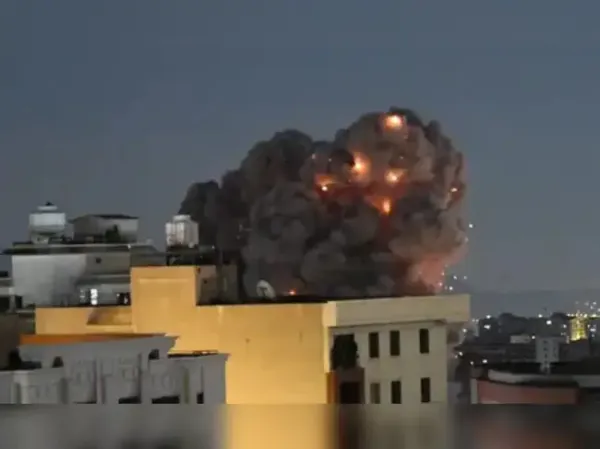
Iran has conveyed its formal response to the United States' proposal for ending the ongoing conflict to Pakistan, rejecting a temporary ceasefire and emphasizing the necessity of a "permanent end to the war," Iran's official news agency IRNA reported on Monday.
Iran's foreign ministry confirmed that Tehran had formulated its positions and demands based on its interests and communicated them through intermediaries. Tehran's response consists of ten clauses, including an end to conflicts in the region, a protocol for safe passage through the Strait of Hormuz, lifting of sanctions, and reconstruction, IRNA said.
The development comes as Pakistan has been playing a central mediating role between Washington and Tehran. Pakistan's army chief, Field Marshal Asim Munir, was in contact "all night long" with US Vice President JD Vance, special envoy Steve Witkoff, and Iranian Foreign Minister Abbas Araghchi as both sides weighed the framework of a plan to end their five-week-old conflict.
Also Read: Ceasefire ahead? Last-ditch US-Iran peace effort is tied in knots
Tehran has stated that a temporary ceasefire would allow adversaries to pause and prepare for the continuation of the war, with the foreign ministry saying "we are calling for an end to the war and for preventing its recurrence."
Iran had earlier firmly rejected the US's 15-point proposal that was conveyed through Pakistan. The US plan called for Tehran to dismantle its nuclear sites, halt uranium enrichment, suspend ballistic missile development, cease support for proxies, and reopen the Strait of Hormuz, in exchange for nuclear-related sanctions relief. Baghaei called the plan "extremely ambitious, unusual, and illogical."
Also Read: Iran war: Indian seafood exporters stare at Rs 1,500 crore loss
Pakistan has proposed a two-stage plan, sometimes referred to as the "Islamabad Accord," which calls for an immediate ceasefire and reopening of the Strait of Hormuz, with 15 to 20 days given to finalise a broader settlement. The final agreement, under that framework, is expected to include Iranian commitments not to pursue nuclear weapons in exchange for sanctions relief and the release of frozen assets.
Trump has threatened to destroy Iran's power plants and other civilian infrastructure if Tehran does not make a deal by Tuesday evening.
Iran's foreign ministry confirmed that Tehran had formulated its positions and demands based on its interests and communicated them through intermediaries. Tehran's response consists of ten clauses, including an end to conflicts in the region, a protocol for safe passage through the Strait of Hormuz, lifting of sanctions, and reconstruction, IRNA said.
The development comes as Pakistan has been playing a central mediating role between Washington and Tehran. Pakistan's army chief, Field Marshal Asim Munir, was in contact "all night long" with US Vice President JD Vance, special envoy Steve Witkoff, and Iranian Foreign Minister Abbas Araghchi as both sides weighed the framework of a plan to end their five-week-old conflict.
Also Read: Ceasefire ahead? Last-ditch US-Iran peace effort is tied in knots
Tehran has stated that a temporary ceasefire would allow adversaries to pause and prepare for the continuation of the war, with the foreign ministry saying "we are calling for an end to the war and for preventing its recurrence."
Iran had earlier firmly rejected the US's 15-point proposal that was conveyed through Pakistan. The US plan called for Tehran to dismantle its nuclear sites, halt uranium enrichment, suspend ballistic missile development, cease support for proxies, and reopen the Strait of Hormuz, in exchange for nuclear-related sanctions relief. Baghaei called the plan "extremely ambitious, unusual, and illogical."
Also Read: Iran war: Indian seafood exporters stare at Rs 1,500 crore loss
Pakistan has proposed a two-stage plan, sometimes referred to as the "Islamabad Accord," which calls for an immediate ceasefire and reopening of the Strait of Hormuz, with 15 to 20 days given to finalise a broader settlement. The final agreement, under that framework, is expected to include Iranian commitments not to pursue nuclear weapons in exchange for sanctions relief and the release of frozen assets.
Trump has threatened to destroy Iran's power plants and other civilian infrastructure if Tehran does not make a deal by Tuesday evening.