
If you’ve ever found yourself instinctively drawn to Hindu mythology, you already understand this: the aura of a goddess is not described, it is experienced.
It is too vast for language, so the texts do something far more intelligent. They translate her into sensation.
Into the softness of a lotus unfolding at dawn. Into the cool trace of sandalwood on skin. Into air thick with incense, flowers and something unnameable that lingers long after the goddess passes.
So much so that, if you read closely, you’ll notice that goddesses are not just seen. They are felt through scent.
Not in the modern, bottled sense of perfume. But through something far more layered like flowers, oils, earth, smoke and sacred atmosphere.
And if you’ve ever felt drawn to embody even a fraction of that presence, then know that it begins with what you emanate.
The Lotus & Goddess Lakshmi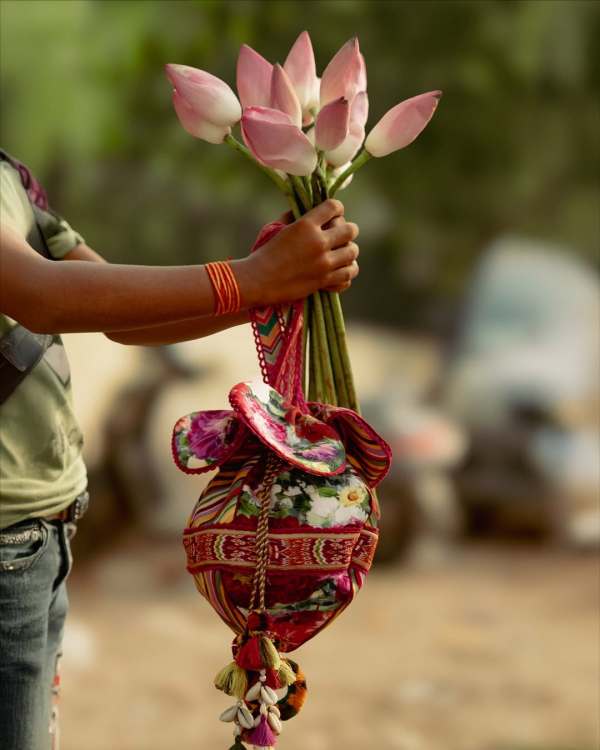 Credit: Instagram/Torani
There is no separating Lakshmi from the lotus.
In the Sri Sukta, she is invoked again and again through it — Padma, Padmapriya, Padmahasta. She is seated on it, holding it, emerging from it. The repetition is deliberate.
But the lotus is not just visual poetry.
In ancient Indian sensory language, it carries a full spectrum. Softly aquatic, faintly sweet, impossibly clean. A scent that rises from still water, untouched by what surrounds it.
To smell like Lakshmi is not to smell floral in an obvious way. It is to feel luminous, abundant, composed, untouched.
Modern translation: Lotus accords, watery florals, softened with sandalwood.
The Scent of Clarity & Goddess Saraswati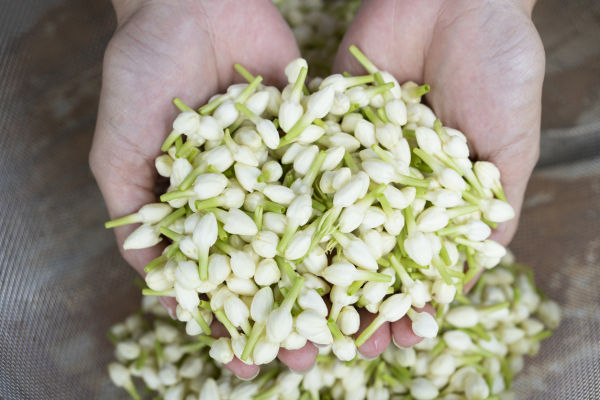 Credit: iStock
In traditional invocations and hymns, Devi Saraswati appears in white. White garments, white lotus, white light. There is an intentional absence of excess. No density. No ornamentation beyond what is essential.
While scriptures don’t describe her scent explicitly, the ritual world around her does: jasmine, white flowers, chandan.
The kind of fragrance that exists gently. To embody Saraswati is to remove noise. To smell like her is to feel clean, precise, almost intellectual.
Modern translation: White florals like jasmine, tuberose worn lightly. Skin that smells like itself, but better. A trace of sandalwood to ground it.
The Warmth of the Living Earth & Goddess Parvati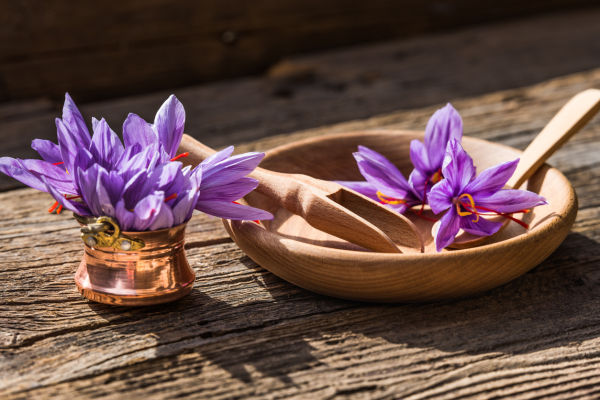 Credit: iStock
Devi Parvati is often misunderstood when reduced to softness. She is, fundamentally, earth energy. Fertile, warm, alive.
Across Puranic traditions, her presence is tied to haldi, kumkum, flowers offered in devotion. Substances that are sensorially rich. Warm, slightly spiced, intimately close to the skin.
Her scent is felt up close. To smell like Parvati is to feel grounded and real.
Modern translation: Rose, saffron, a whisper of spice. Something that sits close to the body and evolves with it.
The Scent of Power & Goddess Durga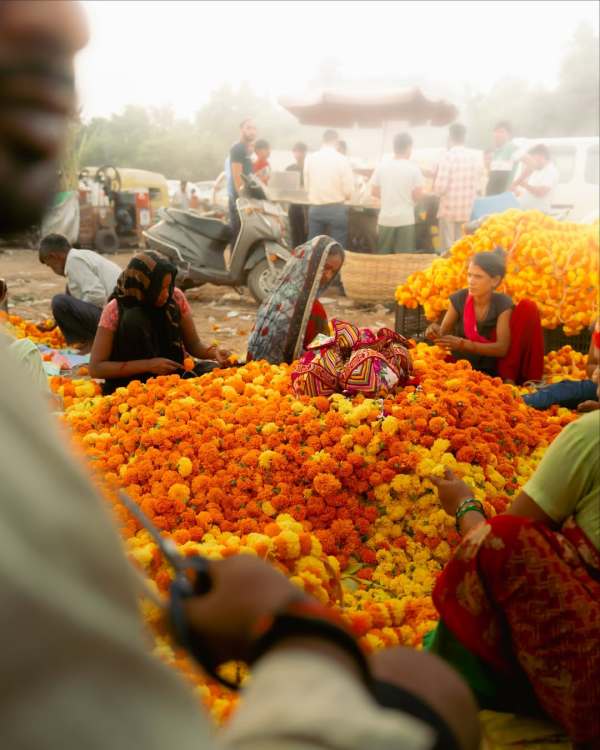 Credit: Instagram/Torani
Devi Durga’s presence is not comfortable.
In the Durga Saptashati, her worship is immersive — gandha (fragrance), dhoop (incense), pushpa (flowers). The air around her is dense, powerful and charged.
Marigold. Incense. Heat. This is not a fragrance you wear to be liked. This is a fragrance that commands space.
To embody Durga is to allow intensity. To smell like her is to feel unignorable, unwavering.
Modern translation: Dry florals like marigold, layered with incense, resins. Slight smokiness. Nothing overly sweet.
Raw Beauty & Goddess Kali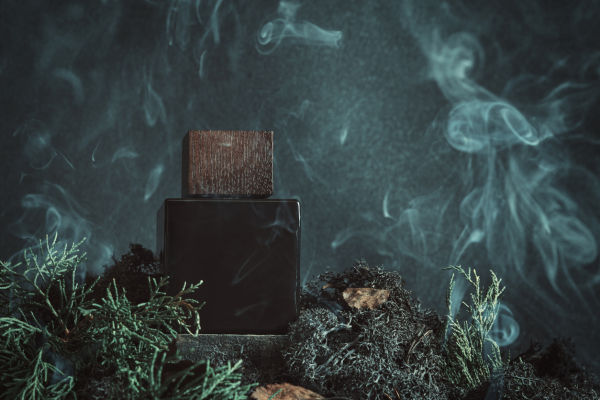 Credit: iStock
Goddess Kali exists outside the framework of conventional appeal.
Her environments, described in tantric traditions, are not perfumed in the way we understand fragrance. They are elemental. Smoke. Earth. Ash. Night air that carries something ancient and unfiltered.
There is no attempt to soften her. To smell like Kali is not to be pleasant. It is to be undeniable. Raw. Transformative. Complete in itself.
Modern translation: Smoky accords, deep resins, vetiver, earth after rain. A scent that feels almost primal.
Devotion That Lingers Through Goddess Radha Credit: Instagram/Torani
Radha’s world is one of blooming landscapes and unspoken emotion.
In texts like the Brahma Vaivarta Purana and devotional poetry, she exists in Vrindavan, surrounded by flowers, movement, longing.
Her scent is felt in the air around her. Jasmine at dusk. Roses warmed by the sun. Sweetness that isn’t excessive, just… enveloping. To smell like Radha is to feel intimate, emotional, unforgettable.
Modern translation: Jasmine, rose, soft sweetness. A fragrance that doesn’t project loudly but stays with those who come close.
The Simplicity of Green & Goddess Tulsi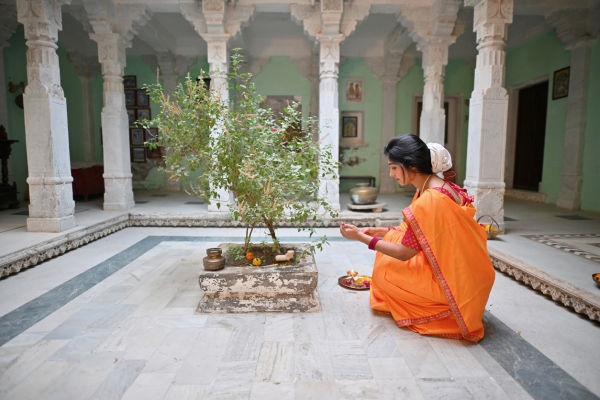 Credit: iStock
Tulsi is perhaps the most literal translation of scent into divinity.
Described in texts like the Padma Purana, she is both goddess and plant. Her fragrance is inherent.
Green. Herbal. Slightly peppery. Clean in a way that feels almost medicinal, yet deeply calming.
To embody Tulsi is to remove excess entirely. To smell like her is to feel pure, grounded, sacred.
Modern translation: Green, herbal notes. Basil, vetiver, light woods. Nothing ornamental.
The Divine Beauty of Goddess Lalita Tripura Sundari Credit: Instagram/Namrata Soni
In the Lalita Sahasranama, Lalita is described through layers of beauty. Sandalwood paste, kumkum, adornment, refinement.
She is luxury. Her scent is rich, but never excessive. Balanced, but deeply present.
To smell like Lalita is to feel elevated, composed, unmistakably refined.
Modern translation: Rose attar, sandalwood, saffron. Warm, enveloping, opulent.
Closing ThoughtsAncient texts never said, “A goddess smells like this.” They did something far more sophisticated. They described her through the flowers offered to her, the rituals performed around her, the environments she inhabits, the word gandha — fragrance —as an intrinsic part of divinity
And in doing so, they created something we are only now beginning to understand.
A goddess creates an atmosphere, an aura that we can recreate by choosing scents that align with how you want to feel - luminous like Lakshmi, precise like Saraswati, warm like Parvati, powerful like Durga, raw like Kali, intimate like Radha
And then, you let it settle into your skin. Your rhythm. Your way of being.
-
Do you also feel nervous before sending a message? Know what is texting anxiety and ways to avoid it

-
Best Flour For Summer: Barley, Jowar, Ragi… Eat rotis made from these flours in summer to keep the stomach cool.

-
Ancient Chinese ‘hair blackening’ herb may fight balding naturally

-
Who is Dr. Maneka Guruswamy? Who became India’s first LGBTQ+ MP, know about her..

-
Raghav Chadha’s big revelation: ‘I will become PM one day’, Arvind Kejriwal shocked