We all have fear of failure. However, failure is unavoidable, especially if we aim to succeed. Success is often preceded by a taste of failure. Successful people who cultivate a positivity mindset are not afraid to persevere even if their endeavors fail badly. Failure should be seen not as something shameful, but as a natural outcome of aiming high and pushing limits. Choosing not to try, simply to stay safe, is considered a greater loss. The message encourages boldness, risk-taking, and perseverance, suggesting that true success lies in the courage to pursue excellence, even if it means facing setbacks along the way.
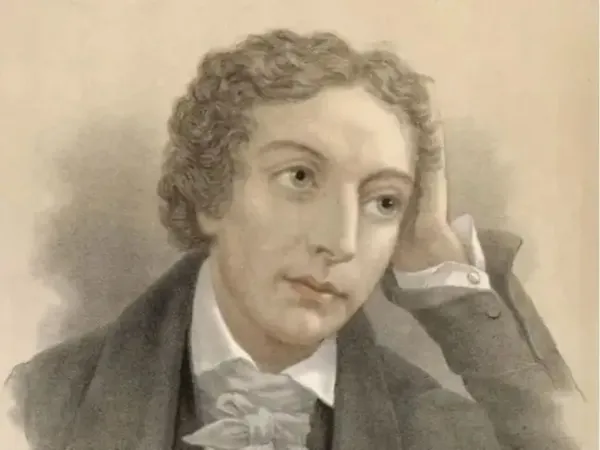
Centuries ago, poet John Keats emphasised on the importance of persevering against all odds in a letter to his friend James Hessey in 1818.
Quote Of The Day By John Keats On Importance Of Perseverance
Keats wrote: “I was never afraid of failure; for I would sooner fail than not be among the greatest.”
Deeper Meaning Behind The Quote
This quote reveals a powerful philosophy about ambition, courage, and the true cost of playing it safe. At its core, it suggests that fear of failure is often the biggest barrier between ordinary lives and extraordinary achievements. The speaker values the pursuit of greatness so deeply that even the possibility of failing is preferable to never trying at all. It reflects a mindset where risk is not something to avoid, but something necessary for growth and excellence.
The deeper meaning lies in redefining failure—not as defeat, but as proof of effort, daring, and aspiration. It highlights that those who aim high must accept setbacks as part of the journey. Choosing comfort and security may protect one from failure, but it also limits potential. Ultimately, the quote encourages embracing challenges boldly, reminding us that greatness is reserved for those willing to risk falling in their pursuit of rising higher.
Relevance Of John Keats’ Words
The quote by John Keats remains deeply relevant in today’s competitive and fast-paced world. It speaks directly to a culture where fear of failure often prevents people from taking bold risks, whether in careers, education, or personal ambitions. Keats’ words challenge this hesitation, encouraging individuals to prioritize growth and excellence over comfort and safety.
In modern contexts—especially in fields like entrepreneurship, technology, and the arts—success often comes only after repeated setbacks. This quote reminds us that failure is not a mark of inadequacy but a stepping stone toward mastery. It also highlights the importance of mindset: those who dare to aim higher, despite uncertainty, are the ones who create meaningful impact.
Ultimately, its relevance lies in inspiring resilience and courage, urging people to embrace challenges rather than avoid them, and to measure life not by failures avoided, but by ambitions pursued.
Early Life and Romantic Identity
John Keats, born on 31 October 1795, emerged as one of the defining literary voices of England’s Romantic movement. He belonged to the second wave of Romantic poets, sharing this creative space with figures such as Lord Byron and Percy Bysshe Shelley. Unlike many of his contemporaries, his poetic journey was brief yet remarkably intense, shaped by imagination, emotional depth, and a profound engagement with beauty and mortality.
A Short Life and Limited Recognition
Keats’s literary career lasted only a few years, with his works circulating publicly for less than four years before his untimely death. He succumbed to tuberculosis in 1821 at the age of just twenty-five. During his lifetime, his poetry failed to receive widespread admiration, often facing lukewarm or dismissive responses from critics. Despite the lack of recognition, he continued to write with dedication, unaware that his legacy would later grow far beyond his brief existence.
Posthumous Fame and Literary Canon
Following his death, Keats’s reputation rose steadily, gaining significant appreciation as the nineteenth century progressed. By its close, he had secured a permanent place within the canon of English literature. His works began influencing a new generation of artists and writers, particularly those associated with the Pre-Raphaelite Brotherhood. His poetic brilliance was formally acknowledged when the Encyclopædia Britannica praised his
Ode to a Nightingale as one of the finest masterpieces in English poetry.
Distinctive Style and Romantic Expression
Keats developed a richly sensuous poetic style, marked by vivid imagery and an intense focus on physical and emotional experiences. His celebrated series of odes stands as a testament to this artistic approach. Like many Romantic poets, he explored deep feelings and heightened emotional states, often expressing them through descriptions of the natural world. His poetry seamlessly blended sensory richness with philosophical reflection, creating works that resonated with both beauty and melancholy.
Enduring Works and Lasting Appeal
Today, Keats’s writings—both his poetry and personal letters—remain widely read and critically examined. Among his most admired creations are
Ode to a Nightingale,
Ode on a Grecian Urn,
Sleep and Poetry, and the sonnet
On First Looking into Chapman’s Homer. These works continue to captivate readers with their lyrical elegance and emotional intensity. The renowned writer Jorge Luis Borges once reflected that his first encounter with Keats left a lifelong impression, highlighting the poet’s enduring emotional power.
Influence on Later Movements
In the later Victorian period, Keats’s fascination with medieval themes gained renewed attention. Poems such as
La Belle Dame Sans Merci and
The Eve of St. Agnes played a crucial role in shaping the aesthetic ideals of the Pre-Raphaelite movement. His influence extended to prominent poets and artists including Algernon Charles Swinburne, Dante Gabriel Rossetti, and William Morris. Through them, Keats’s imaginative vision and stylistic richness continued to inspire generations, ensuring his lasting place in literary history.