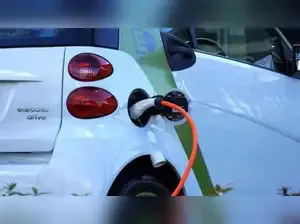
Sales of electric, hybrid and CNG-powered passenger vehicles grew at more than double the pace of the automobile industry average, and accounted for nearly a third of the market last fiscal year, underlining rising inclination towards cleaner mobility among Indian buyers.
Nearly 1.34 million units of these vehicles were sold in the year ended March 31, a 31% increase compared with 1.02 million units in FY25, show data collated from the government’s Vahan portal and the Society of Indian Automobile Manufacturers. Total passenger vehicle sales rose 13% in the fiscal year to about 4.67 million units.
The growing shift towards cleaner mobility will provide respite to the government amid India’s high dependence on oil and gas imports and the difficulty in sourcing fossil fuels due to the West Asia crisis.
The Modi administration has had to cut taxes to shield consumers from higher petrol and diesel prices amid the supply crunch. The hard economics of expensive fossil fuels, and growing awareness about deteriorating air quality in cities are nudging buyers toward alternatives that promise lower running costs and a lighter carbon footprint. The demand growth is also supported by expanding charging and CNG supply infrastructure.
A flood of new models is also hitting the road.
The shift to cleantech is expected to accelerate amid tightening emission regulations and the crisis in West Asia, senior industry executives told ET.
“First and foremost, economics itself is driving up sales of CNG, hybrid and electric vehicles,” said Ashim Sharma, senior partner at Nomura Research Institute, also citing improving infrastructure and launch of new models.
Hybrids offer the best of both worlds to buyers who want to drive longer distances at lower operating cost without having to worry about range, he said.
Tata Motors Passenger Vehicles managing director and chief executive Shailesh Chandra cited improving consumer confidence in electric vehicles and wider participation by manufacturers, with all major companies launching new products to cater to the demand growth.
CNG-fuelled vehicle volumes in the industry grew 20% and EV volumes surpassed the 200,000-unit milestone last fiscal year, he said.
Tata Motors, which offers CNG options in five of its vehicles, posted 24% growth in sales in the segment at 170,000 units last fiscal year. Sales of its electric vehicles rose 43% to 92,000 units in the same period, Chandra said. “Industry momentum is expected to sustain, led by growth in SUVs, CNG and EV,” he said. The company does not have any hybrid vehicle in its portfolio.
Maruti Suzuki, which recently launched its first electric vehicle, is also seeing growing traction for alternative fuel options. “Demand for CNG is robust,” Partho Banerjee, senior executive officer (marketing and sales) at the country’s largest carmaker, said last week. There is good acceptance among customers for electric vehicles too, with more models on offers in the mainstream market, he said.
While consumer popularity is growing, carmakers have lined up multiple EV launches over the next three to four years, amid tightening emission rules. Electric cars, in fact, are poised to dominate the launch portfolio of automakers in the coming months.
Tata Motors is scheduled to introduce the Sierra EV shortly. Also on the cards are three new models from Vietnamese electric carmaker VinFast, and an electric SUV each from Toyota Kirloskar Motor and Kia India. New EVs that hit the road recently include Maruti Suzuki e-Vitara, Mahindra XEV 9s and Tata Punch EV.
The industry projects the share of EVs in new car sales in India to increase to 13-15% by the turn of the decade, from about 4% at the end of FY26.
Nearly 1.34 million units of these vehicles were sold in the year ended March 31, a 31% increase compared with 1.02 million units in FY25, show data collated from the government’s Vahan portal and the Society of Indian Automobile Manufacturers. Total passenger vehicle sales rose 13% in the fiscal year to about 4.67 million units.
The growing shift towards cleaner mobility will provide respite to the government amid India’s high dependence on oil and gas imports and the difficulty in sourcing fossil fuels due to the West Asia crisis.
The Modi administration has had to cut taxes to shield consumers from higher petrol and diesel prices amid the supply crunch. The hard economics of expensive fossil fuels, and growing awareness about deteriorating air quality in cities are nudging buyers toward alternatives that promise lower running costs and a lighter carbon footprint. The demand growth is also supported by expanding charging and CNG supply infrastructure.
A flood of new models is also hitting the road.
The shift to cleantech is expected to accelerate amid tightening emission regulations and the crisis in West Asia, senior industry executives told ET.
“First and foremost, economics itself is driving up sales of CNG, hybrid and electric vehicles,” said Ashim Sharma, senior partner at Nomura Research Institute, also citing improving infrastructure and launch of new models.
Hybrids offer the best of both worlds to buyers who want to drive longer distances at lower operating cost without having to worry about range, he said.
Tata Motors Passenger Vehicles managing director and chief executive Shailesh Chandra cited improving consumer confidence in electric vehicles and wider participation by manufacturers, with all major companies launching new products to cater to the demand growth.
CNG-fuelled vehicle volumes in the industry grew 20% and EV volumes surpassed the 200,000-unit milestone last fiscal year, he said.
Tata Motors, which offers CNG options in five of its vehicles, posted 24% growth in sales in the segment at 170,000 units last fiscal year. Sales of its electric vehicles rose 43% to 92,000 units in the same period, Chandra said. “Industry momentum is expected to sustain, led by growth in SUVs, CNG and EV,” he said. The company does not have any hybrid vehicle in its portfolio.
Maruti Suzuki, which recently launched its first electric vehicle, is also seeing growing traction for alternative fuel options. “Demand for CNG is robust,” Partho Banerjee, senior executive officer (marketing and sales) at the country’s largest carmaker, said last week. There is good acceptance among customers for electric vehicles too, with more models on offers in the mainstream market, he said.
While consumer popularity is growing, carmakers have lined up multiple EV launches over the next three to four years, amid tightening emission rules. Electric cars, in fact, are poised to dominate the launch portfolio of automakers in the coming months.
Tata Motors is scheduled to introduce the Sierra EV shortly. Also on the cards are three new models from Vietnamese electric carmaker VinFast, and an electric SUV each from Toyota Kirloskar Motor and Kia India. New EVs that hit the road recently include Maruti Suzuki e-Vitara, Mahindra XEV 9s and Tata Punch EV.
The industry projects the share of EVs in new car sales in India to increase to 13-15% by the turn of the decade, from about 4% at the end of FY26.
(This story has not been edited by economictimes.com and is auto–generated from a syndicated feed we subscribe to.)