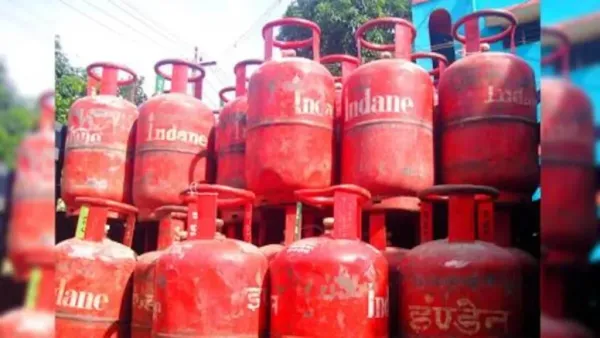
The Ministry of Petroleum and Natural Gas has issued an official clarification on April 1, 2026 explaining why commercial LPG cylinder prices have risen while domestic cooking gas prices for Indian households remain completely unchanged. The statement reveals the scale of financial losses being absorbed by government-owned oil companies to protect Indian consumers from the full force of the Iran war’s impact on global LPG markets.
The Numbers That Matter for Your Kitchen
The 14.2 kg domestic LPG cylinder that Indian households use for cooking remains at Rs 913. It has not increased. It will not increase under the current policy framework. For Pradhan Mantri Ujjwala Yojana beneficiaries, the price remains at Rs 613, also unchanged.
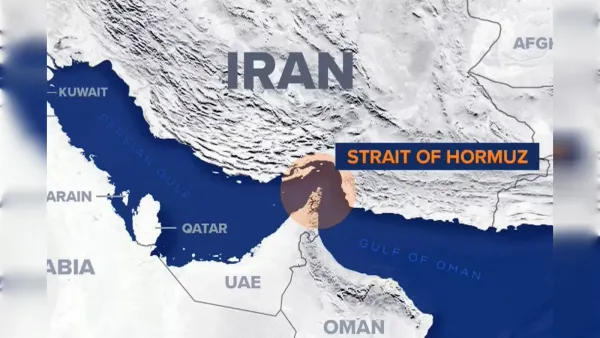
These prices are being held steady despite a dramatic spike in international LPG costs that has hit global markets following the closure of the Strait of Hormuz. At current prices, OMCs are incurring an under-recovery of Rs 380 per cylinder on every domestic LPG cylinder sold in India. That Rs 380 per cylinder loss is being absorbed entirely by government-owned oil marketing companies so that it does not reach the Indian consumer.
Why Commercial Cylinders Got More Expensive
The 19 kg commercial LPG cylinder used by hotels, restaurants, and industrial establishments has seen a significant price increase in April, with Delhi prices rising by Rs 195.50 and Kolkata by Rs 218 effective April 1. The Ministry’s statement explains precisely why.
Commercial LPG cylinder prices in India are deregulated and market-determined, revised monthly based on international benchmarks. The Saudi Contract Price, the primary global benchmark for LPG, has surged 44 percent in a single month, jumping from $542 per metric tonne in March to $780 per metric tonne for April. The reason for this extraordinary spike is structural: 20 to 30 percent of global LPG supplies are stuck in the Strait of Hormuz due to the ongoing Iran war, creating a supply shock that has driven international LPG prices sharply higher.
Since commercial cylinders account for less than 10 percent of total LPG consumption in India and their prices are deregulated, the market-driven increase is being passed through to commercial users. Hotels and restaurants will pay more for their cooking gas. Your home cylinder will not.
The Scale of What OMCs Are Absorbing
The Ministry’s statement puts the cumulative financial impact of protecting domestic consumers in stark numerical terms. At the current under-recovery of Rs 380 per cylinder on domestic LPG, cumulative OMC losses on domestic LPG alone will reach approximately Rs 40,484 crore by the end of May 2026.
To contextualise that figure, the Ministry notes that last year OMCs incurred total losses of Rs 60,000 crore on domestic LPG. Of that, Rs 30,000 crore was absorbed by Oil PSUs from their own balance sheets and Rs 30,000 crore was absorbed by the Government of India through direct support. The same framework is being applied in 2026, with Indian citizens insulated from international price shocks through a combination of OMC balance sheet losses and government fiscal support.
This is not the first time India has used this mechanism. It is the same approach that has been applied to retail petrol and diesel pricing, to ATF pricing for domestic airlines as announced separately today, and now to domestic LPG. The Iran war has triggered a coordinated government policy to absorb commodity price shocks across multiple fuel categories rather than passing them to Indian consumers.
India’s Domestic LPG Price in Global Context
The Ministry’s statement places India’s domestic LPG price in a regional and global context that makes the scale of the subsidy immediately apparent. The 14.2 kg domestic cylinder in India costs Rs 913. The equivalent in Pakistan costs Rs 1,046. In Sri Lanka it costs Rs 1,242. In Nepal it costs Rs 1,208. India’s domestic LPG price is lower than all three neighbouring countries, each of which is itself subsidising cooking gas to varying degrees.
The comparison is particularly striking given that India is managing this price level while absorbing a 44 percent spike in the Saudi Contract Price, an extraordinary single-month movement that reflects the direct supply disruption impact of the Strait of Hormuz closure on global LPG markets.
What This Means Going Forward
The cumulative OMC loss figure of Rs 40,484 crore by end of May is a forward-looking estimate based on current under-recovery levels and projected sales volumes. It assumes the Strait of Hormuz remains blocked and international LPG prices remain elevated through May. If a ceasefire is achieved and the Strait reopens, allowing the 20 to 30 percent of global LPG supplies currently stuck in the strait to resume normal flow, international LPG prices would be expected to fall, reducing the under-recovery and the cumulative loss trajectory.
Wednesday’s broader market rally on Trump’s ceasefire signals is therefore directly relevant to India’s LPG subsidy burden. A resolution of the Iran conflict is not just a geopolitical event. For India’s government finances and OMC balance sheets, it is a fiscal relief event that would materially reduce the cost of protecting Indian consumers from international energy prices.
Until that resolution arrives, the 14.2 kg domestic cylinder stays at Rs 913 and the Rs 380 per cylinder loss stays on the OMC balance sheet. The government has chosen the consumer over the balance sheet. The balance sheet will be reconciled later.
All price data and financial figures are sourced from the official Ministry of Petroleum and Natural Gas statement dated April 1, 2026. This article is for informational purposes only and does not constitute financial or investment advice.
-
‘Attempt to divert attention’: BJP on Pak Minister Khwaja Asif’s remark
-
Bengal SIR: Tribunal orders Congress candidate reinstated in supplementary roll
-
OPEC+ nations to ramp up oil output in May amid global energy crisis
-
Iran says Strait of Hormuz will ‘never return to former state’ for US, Israel
-
School Assembly News Headlines Today April 6, Top National, International, Sports, Business News