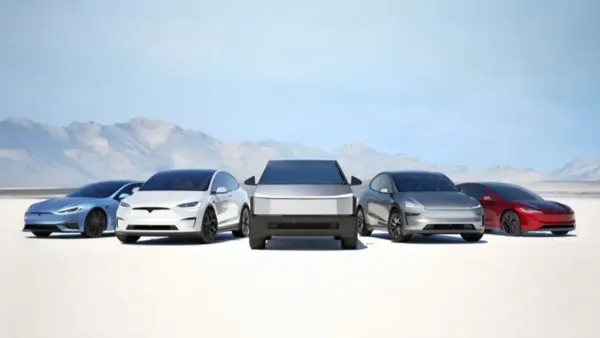
Tesla has reclaimed the title of the world’s largest pure electric vehicle maker, overtaking China’s BYD for the first time since late 2024. The shift comes after Tesla posted a modest but meaningful rise in deliveries during the first quarter of 2026, while BYD experienced a notable slowdown.
Between January and March, Tesla delivered 358,023 vehicles globally, marking a 6.5 percent year-on-year increase. The growth may appear modest on paper, but it proved enough to outpace BYD, whose battery electric vehicle sales dropped sharply during the same period.
BYD, which manufactures both battery electric vehicles and plug-in hybrids, reported 310,389 BEV deliveries in the first quarter. The decline marked a 25.5 percent drop compared to the previous period, allowing Tesla to retake the top spot in the global electric vehicle race.
China slowdown hits BYD hard
Much of BYD’s decline can be traced back to shifting government incentives in China, the world’s largest EV market. Policy changes introduced at the start of 2026 reduced subsidies and gradually phased out tax incentives that previously helped boost electric vehicle adoption.
Under the new trade-in subsidy scheme, buyers replacing older vehicles now receive up to 12 percent of a new car’s price, capped at 20,000 yuan. Previously, buyers were eligible for a flat 20,000 yuan incentive regardless of vehicle price. The adjustment effectively reduced subsidies for many entry-level EV buyers.
At the same time, China also began phasing out its EV sales tax holiday. Buyers who were exempt from the 10 percent vehicle sales tax last year are now required to pay a 5 percent levy. Combined, the policy changes made EV purchases less attractive, especially in the lower price segments where BYD dominates.
Industry analysts say the impact was immediate. Slower demand in January and February weighed heavily on BYD’s quarterly performance, particularly in its domestic market, which remains its largest growth driver.
Tesla benefits from global base
Tesla, meanwhile, leaned on its broader global footprint to maintain stability. Analysts note that Tesla’s diverse customer base across North America, Europe and Asia helped cushion any regional slowdowns.
Tesla’s Shanghai Gigafactory played a critical role in the company’s first-quarter performance. The facility delivered 213,398 vehicles during the quarter, accounting for nearly 60 percent of Tesla’s global output. March alone saw deliveries from the Shanghai plant climb 46.2 percent compared with February, reaching 85,670 units.
To maintain momentum in China, Tesla also introduced alternative incentives rather than direct price cuts. These included low-interest financing and extended loan periods. In January, Tesla China rolled out a seven-year financing plan with an annual interest rate of 1.36 percent, allowing buyers to pay less than 2,000 yuan per month for a Model 3 or Model Y after a down payment.
Competition far from over
Despite the first-quarter setback, BYD showed signs of recovery toward the end of the period. The company reported a strong rebound in March, with sales jumping nearly 58 percent from February. Fresh local subsidies and rising fuel costs helped boost demand.
The rivalry between Tesla and BYD has intensified since mid-2023, when both companies began trading positions as the world’s leading EV manufacturer. With policy shifts, pricing strategies and new product launches expected throughout the year, the competition is likely to remain tight.
For now, Tesla has regained the crown. But in the fast-moving EV market, leadership can change quickly.
-
Mom Refuses To Take Away Her Teen’s Phone As Punishment

-
One Therapy Session Can Make A Difference If the Mindset Is Right, Experts Weigh In

-
Is the distance with the partner increasing? If you give only 47 minutes a day, life will be filled with love!

-
Tarot Expert Predicts Bold Career Wins And Calls For Financial Discipline

-
How Many AA Batteries Does It Take To Power A PC? This YouTuber Found The Answer