CBSE has relaxed language norms for overseas schools, allowing one compulsory Indian language instead of two under its new curriculum framework. The Board has also introduced case-by-case exemptions for students returning to India.
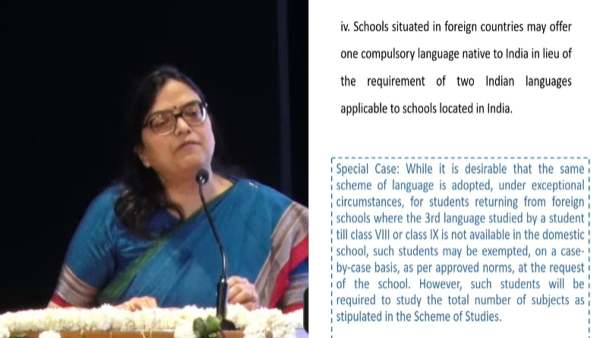
New Delhi: The Central Board of Secondary Education (CBSE) has eased its language requirements for schools located abroad, allowing them to offer one compulsory Indian language instead of two, as part of its newly unveiled curriculum framework for Classes 9 and 10 to be implemented from the 2026–27 academic session.
Announcing the change, Dr Pragya M. Singh, Professor and Director (Academic), CBSE, said that foreign schools will be given flexibility in meeting language requirements. “Schools situated in foreign countries are exempted for this… they may offer one compulsory language native to India in lieu of the requirement of two Indian languages,” she said.
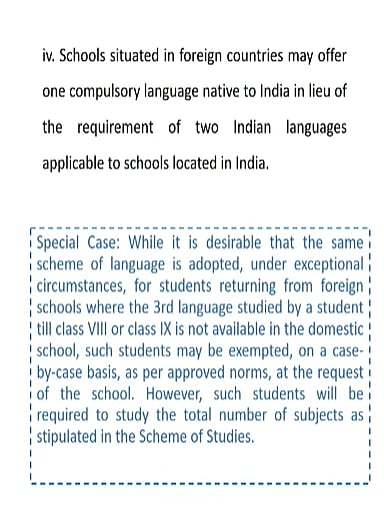
The move marks a departure from the earlier structure where students were typically required to study two languages at the secondary level. The relaxation is proposed with a view to address the practical challenges faced by international schools. The challenges include the absence of Indian language options and the diversity of the student profile.
Exemptions for returning students under special cases
-
Ethical Concerns In Research Rise As Publication Pressure Mounts In Indian Academia

-
BMC Launches Pre-Primary Classes In Its CBSE Schools For First Time, Enrolling 5,573 Students

-
Congo joins US list of third-country deportation destinations

-
Mumbai Indians Coach Praises Jasprit Bumrah's Remarkable Evolution

-
Incredible Rescue of Downed F-15E Pilot on Easter Sunday