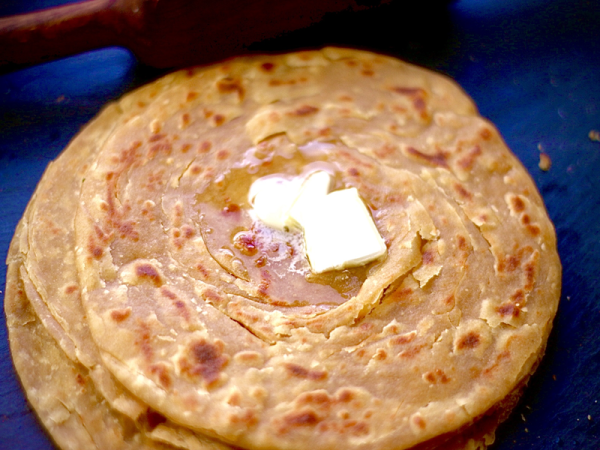
When it comes to food, the taste of parathas is truly unique. Whether served at the breakfast table or alongside dinner, parathas never fail to win everyone's hearts. This is especially true if your husband prefers parathas over *puris*; in that case, it becomes essential for you to prepare parathas for him that are absolutely perfect and delightfully flaky.

Just imagine: when each individual layer of the paratha unfolds before him—accompanied by a dollop of butter—he will not only be delighted but will also be unable to stop singing your praises. Let's explore in detail some techniques that will make your parathas even flakier and more delicious:
The Art of Kneading the Dough
Adding a small amount of *maida* (all-purpose flour) to the wheat flour helps enhance the flakiness of the parathas. While kneading, use lukewarm water and incorporate a pinch of salt along with 1–2 teaspoons of oil or *ghee*. Do not make the dough too stiff or too loose; aim for a consistency that makes it easy to roll out.
Allowing the Dough to Rest
If kneaded dough is rolled out immediately, the resulting parathas tend to turn out tough. Therefore, cover the dough with a damp cloth and let it rest for at least 20–30 minutes.
The Correct Method for Creating Layers
The very essence of a flaky paratha lies in its layering technique. Roll out a ball of dough, apply a thin layer of *ghee* over it, and then sprinkle some dry flour on top. Now, either roll it up like a log or fold it like an accordion (fan-style), and then reshape it back into a round ball. This specific process ensures that the paratha naturally develops distinct layers as you roll it out.
The Right Balance of Rolling and Cooking
While rolling out the paratha, ensure that it is neither too thin nor too thick. A medium thickness allows the layers of the paratha to open up beautifully. The *tava* (griddle) should always be heated over a medium-high flame. If the *tava* is excessively hot, the paratha may burn on the outside while remaining raw on the inside.
Choosing Between Ghee and Oil
The authentic flavor of a paratha truly comes through when cooked in *ghee*; however, for a lighter meal option, one may also choose to use oil. When placing the paratha on the griddle, ensure it is cooked thoroughly on both sides, and spread the ghee evenly.

Make it Special with Stuffing
Parathas become even more delightful when stuffed. Whether it’s potato, paneer, cauliflower, radish, spinach, fenugreek, or cheese—fill them with whichever stuffing you prefer, seasoned with the right blend of spices. While adding the stuffing, keep in mind that it should not be too moist; otherwise, the paratha may tear.
Presentation and Serving
Serve the piping hot parathas accompanied by a dollop of butter, yogurt, pickles, and green chilies. Adding slices of onion on the side will further enhance the flavor. Occasionally, you may also choose to serve the parathas with raita or chutney.
PC Social Media
-
UIDAI Internship 2026: Apply For 28 Posts, Direct Link, Eligibility, Stipend & Last Date

-
Amid Vijay Relationship Rumours, Trisha Krishnan Shares Cryptic Post On Love And Peace

-
'They Used Pakistani-Linked Material': Himanta Sarma Launches Fresh Attack On Congress
-
Realme 16 5G With 7,000mAh Battery, MediaTek Dimensity 6400 Turbo SoC Launched In India, Priced At ₹31,999

-
Redmi Note 15 SE 5G With 50-Megapixel Dual Cameras, 5,800mAh Battery Launched In India: Priced Starting At ₹19,999