Most bakery goods use eggs in their preparations. Hence, egg consumption in bakeries is quite high, which also allows for significant spoilage and rotting of eggs. It is the duty of manufacturers to maintain a quality check. Sadly, in a shocking food safety inspection, Hyderabad police busted an illegal bakery unit operating in the Katedan area. According to a post shared by the Hyderabad City Police on X (formerly Twitter) on Thursday morning, the Mailardevpally Police raided a unit named "Madurai Meenakshi Food Company." The factory allegedly produced bakery items such as donut buns and cakes under extremely unhygienic conditions.
According to police, the unit used rotten eggs and mixed them with chemicals such as sodium benzoate, sorbic acid, and PGPR liquid while preparing food products. These items were reportedly sold in the market as regular bakery goods. In its post, the police highlighted that the products posed "serious health risks." During the raid, officials seized a large quantity of spoiled eggs, chemicals, synthetic colours and flavours, as well as ready-to-sell bakery items.
This case is a reminder for consumers to be very mindful of packaged foods. According to the Food Safety and Standards Authority of India (FSSAI), it is important for consumers to be well-versed about egg quality and safety guidelines related to eggs consumption. Take a look at what FSSAI's guideline titled "Egg Quality and Safety: Dispelling the myth about plastic egg" states.
How to maintain freshness of eggs
1. According to FSSAI, eggs maintain their freshness for up to 10-12 days, after they are laid, at a room temperature of about (28±2°C), but the shelf life will be shorter at higher temperatures. The important factor in maintaining egg freshness is mainly temperature while humidity also affects it to some extent.
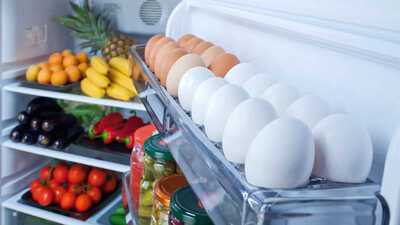
2. It also states that when storing eggs in the refrigerator, keeping them in designated shelves or egg cases is the best way to maintain their freshness.
3. To maintain egg freshness and performance, buy the eggs from stores that keep them at cooler temperatures or stores that keep them in well ventilated covered places and maintain ambient temperature.
4. Consumers should strictly avoid handling eggs roughly and leaving them in hot vehicles or places where temperatures are very high. Refrigerate the eggs once you reach home.
5. Do not use dirty or cracked eggs. Cracked eggshells are a perfect foil for bacterial infections and the dirty eggs may also contaminate other food stuffs. Dirty eggs may be contaminated but might not smell bad. Avoid washing dirty eggs, as they become more porous when wet, thus allowing bacteria an easy entry inside the eggs.
6. If an egg is cracked or too dirty, dispose of it. Also, always wash your hands thoroughly with soap and water after handling eggs.

Testing eggs for freshness
1. A fresh egg, when held against a very bright light in a dark room, will display a small air gap usually at the broader (blunt) end of the egg. As the egg ages, the air cell expands in volume. Upon hard boiling a fresh egg, you can clearly see the indentation left behind at the top of the egg once the shell is peeled off.
2. In the case of fresh eggs, the yolk normally stays in the centre and is not very mobile because of the chalaza (the strings of tissue) that hold it in place. When hard boiled eggs are cut lengthwise, one can see that the yolk has moved off the centre.
3. For a quick test to check the freshness of an egg, immerse it in a mug or basin of water. Fresh eggs will remain at the bottom widthwise; older eggs will remain at the bottom on one end while the stale/rotten ones will float because of the larger air cell. It should be noted that sometimes a weak shell and fine cracks can also cause the egg to float.
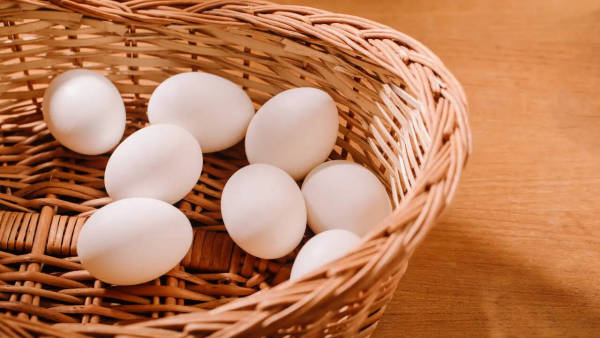
4. When broken out of the shell, good quality, fresh eggs display certain characteristics, such as, the yolk that is rounded, small and stands high in a thick and gel like egg white. As the egg ages, the egg white becomes thin and runny and finally, the egg yolk and white dissolve into each other in older or rotten eggs (or the alleged plastic/fake eggs). The older eggs may also develop a rotten odour and will have lost the typical egg odour.
5. With the aging of the egg and the white becoming thinner, one can clearly notice that it will take a longer time to whip into foam, and when whipped the foam is less stable or collapses faster. However, it is also important to note that very fresh eggs also do not foam well and take longer time; but, once beaten the foam is very stable as compared to older eggs. The maximum and better foam volume/stability can be obtained from three or four day old eggs.
-
West Asia conflict: India, Qatar stress need for negotiation to ensure energy security

-
West Asia conflict: India, Qatar stress need for negotiation to ensure energy security
-
West Asia conflict: India, Qatar stress need for negotiation to ensure energy security
-
KKR vs PBKS: Kolkata faces a challenge to secure 2 points against Punjab as rain threatens to jeopardise the the match

-
KKR vs PBKS: Kolkata faces a challenge to secure 2 points against Punjab as rain threatens to jeopardise the the match