
He failed more than once before he found his footing, a young confectioner whose early ventures collapsed under financial strain and inexperience. Each setback chipped away at his resources but quietly strengthened his resolve. Instead of stepping away, he studied what went wrong, refined his craft, and returned with sharper focus. Those early failures became the foundation of a remarkable turnaround, one that would later shape an entire industry and leave behind a lasting legacy. Scroll down to read more.
The apprentice who kept rebuilding Milton S. Hershey ’s career began in apprenticeship and small shops. After training as a confectioner in Lancaster, he opened his first candy store in Philadelphia in 1876; six years of grinding effort ended in bankruptcy . He tried again in other cities, working in Denver and Chicago, and later attempting ventures in New York, and met failure more than once. Those early collapses left him thinner in cash but sharper in tradecraft: a clearer sense of what customers wanted, how to scale production and which mistakes to avoid. 
Finding a sweet spot: Caramels, scale and timing
The breakthrough came when Hershey focused on one product and one method. In the mid-1880s he returned to Lancaster and founded a caramel business that used fresh milk in the recipe, a detail that delivered a richer, more reliable product and set his goods apart. By emphasizing consistency, mechanized cooking and expanding distribution, his Lancaster Caramel Company grew rapidly through the 1890s, turning the man who had been dismissed for failure into a profitable manufacturer. 
Selling up and betting on chocolateAt the turn of the century Hershey did something many entrepreneurs never manage: he converted scale into a second act. In 1900 he sold the caramel business for about $1 million, a vast sum then and redirected both capital and attention to chocolate, a market he had watched and studied after seeing European machinery at the 1893 Chicago exposition. The Hershey Chocolate Company , initially a subsidiary of the caramel firm, became his concentrated wager: to make milk chocolate affordable and available to ordinary Americans rather than a luxury for the wealthy. 
Building a town, a factory and an idea of responsibility
Hershey’s commitment to his enterprise was both tangible and industrial in nature. He constructed a large-scale factory in Derry Township and set forth plans for housing and various amenities aimed at his workers, thus creating the foundation of the company town that continues to bear his name today. He also established a remarkable model of corporate philanthropy that was ahead of its time: in 1909, he and his wife founded a school specifically for orphaned boys, and in the years that followed, a substantial portion of his wealth was allocated into a trust dedicated to supporting that institution. This unique combination of business acumen and social responsibility solidified his legacy into something far more significant than just a brand: it became a pioneering experiment in building a community that was closely linked to an iconic American industrial achievement.
Why the failure story matters now
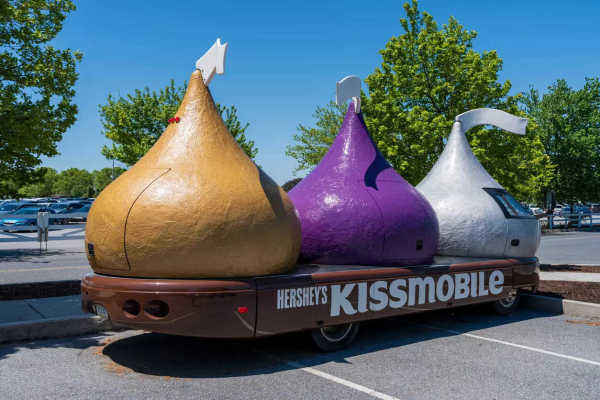
The journey from bankruptcy to establishing an empire is not a straightforward moral tale; rather, it is a matter of logistics. The challenges and failures faced by Hershey imparted invaluable lessons regarding what elements to standardize, the appropriate times to incur debt, the necessity to automate processes, and the methodology for producing a single product consistently at a large scale. These experiences also significantly altered his appetite for risk: following his bankruptcy, he adopted a pragmatic approach, choosing to reinvest his profits and invest in machinery that lessened his dependence on specialized artisans. Such strategic decisions made chocolate accessible to a broader audience and transformed a local manufacturer into a nationally recognized brand.
The Hershey story resists platitudes. It’s not only about grit; it’s about iteration, specialization and the rare willingness to sell your first success to fund the next. The man who had been bankrupt, more than once, by his own telling, went on to give his name to factories, parks and schools and to place a cheap, familiar pleasure on the shelves of millions. That contradiction, failure used as a tactical map rather than a verdict, is what turned small-time candy-making into one of the world’s most recognizable food empires.