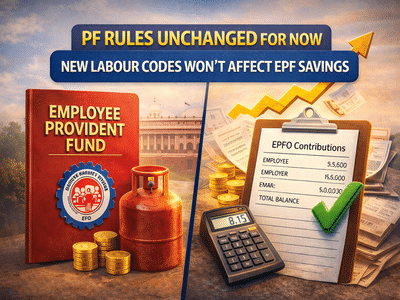
For millions of salaried workers in India, the Employees’ Provident Fund (EPF) serves as one of the most important tools for long-term financial security. As discussions around the implementation of the new labour codes continue, many employees have been wondering whether these reforms could alter the rules governing their provident fund savings.
The government has now addressed these concerns. During a discussion in Parliament, the Ministry of Labour and Employment clarified that there are currently no proposals to make major changes to the EPFO framework, even after the new labour codes are implemented. This announcement provides reassurance to employees who depend on EPF as a key component of their retirement savings.
Government Responds to Questions in ParliamentThe clarification came after a query was raised in the Rajya Sabha regarding whether the new labour codes would lead to changes in the Employees’ Provident Fund Organisation (EPFO) scheme. The question also asked whether the government was planning to revise the interest rate provided on EPF deposits.
Responding to the discussion, the Minister of State for Labour and Employment informed the House that there are no immediate proposals to significantly modify the EPFO system. This means that the current rules governing provident fund contributions, withdrawals and account management are expected to remain in place for the foreseeable future.
The statement aims to remove uncertainty among employees who had been concerned that labour law reforms could impact their retirement savings structure.
EPF System to Continue in Its Current FormThe Employees’ Provident Fund Organisation (EPFO) is responsible for managing retirement savings for millions of salaried individuals across India. Under the existing system, both employees and employers contribute a fixed percentage of the employee’s salary to the EPF account every month.
These contributions accumulate over time and earn interest, helping employees build a financial cushion for the future. The accumulated savings can be used after retirement or withdrawn under specific conditions such as housing needs, medical emergencies, higher education or other approved purposes.
With the government confirming that no immediate changes are planned, the current contribution structure and withdrawal rules are expected to remain unchanged for now.
How EPF Interest Rates Are DeterminedAnother key aspect of the provident fund system is the interest earned on EPF deposits. The Ministry of Labour and Employment explained that the interest rate is determined according to the provisions of the Employees’ Provident Funds Scheme, 1952.
Under this framework, the interest rate is first recommended by the Central Board of Trustees (CBT) of EPFO, which includes representatives from the government, employers and employees. Once the recommendation is made, the Central Government reviews and approves the final rate.
The approved interest rate is then credited to the EPF accounts of members for the relevant financial year.
Financial Sustainability Plays a Key RoleOfficials also emphasised that maintaining the financial stability of the EPF system is a major factor when deciding the interest rate.
Before announcing the rate, authorities evaluate the returns generated from EPFO’s investments in various financial instruments. The interest paid to members must be supported by the income earned through these investments.
This careful approach ensures that the EPF interest payouts remain sustainable and that the provident fund system continues to operate smoothly for millions of members.
What This Means for EmployeesFor now, employees can remain assured that their EPF savings structure will continue as it currently exists, even as the government moves forward with broader labour law reforms.
The clarification indicates that the implementation of new labour codes will not automatically result in changes to provident fund rules. However, policy decisions may evolve in the future as labour reforms progress.
Until any official changes are announced, the EPF system will remain a key pillar of financial security for workers across India, helping them build retirement savings through regular contributions and interest accumulation.
Disclaimer:
This article is intended for informational purposes only. Labour regulations, government policies and EPF rules may change in the future. Readers are advised to refer to official announcements from the Government of India or the EPFO website for the latest and most accurate information.
-
Do you also feel nervous before sending a message? Know what is texting anxiety and ways to avoid it

-
Best Flour For Summer: Barley, Jowar, Ragi… Eat rotis made from these flours in summer to keep the stomach cool.

-
Ancient Chinese ‘hair blackening’ herb may fight balding naturally

-
Who is Dr. Maneka Guruswamy? Who became India’s first LGBTQ+ MP, know about her..

-
Raghav Chadha’s big revelation: ‘I will become PM one day’, Arvind Kejriwal shocked